Renovating for Heat Waves: Cooling Dutch Homes Sustainably
Picture this: a classic Dutch row house on a calm, sunny day. The brick facade soaks up the warmth, and by mid-afternoon, the living room feels like a greenhouse. If this scenario is becoming all too familiar, you’re not alone. Across the Netherlands, increasingly frequent and intense heat waves are turning our homes, many designed for a cooler maritime climate, into sweltering boxes. But what if your next renovation could transform your home into a cool, comfortable sanctuary without spiralling energy costs? We’re exploring the smart, sustainable upgrades that Dutch homeowners are adopting not just for comfort, but as a necessary adaptation to our changing climate.
Basic Concepts: Understanding Your Home’s Climate Battle
Before exploring solutions, let’s clarify some terms central to a Dutch climate-adaptive renovation. The goal is passive cooling: using design, materials, and nature to maintain pleasant temperatures without relying heavily on energy-guzzling air conditioning.
- Thermal Mass: Think of this as your home’s thermal battery. Materials like concrete, brick, and stone absorb heat during the day and slowly release it at night. In the right setup, this can delay and reduce indoor temperature peaks.
- Cross-Ventilation: This is the art of creating a breeze through strategic window placement. Opening windows on opposite sides of a room or house allows cooler air to flow in and push warmer air out.
- Bouwvergunning (Building Permit): Crucial for any significant structural change, like adding large windows, a sunroom, or an extension. Your local municipality (gemeente) assesses if your plans meet zoning, safety, and aesthetic rules. Never skip this step.
- Oververhitting (Overheating): This technical term is now a key criterion in Dutch building codes. It measures a building’s risk of excessive indoor heat, pushing architects and builders to integrate cooling strategies from the ground up.
Shading: Your First and Most Powerful Defence
How do you stop heat before it even enters? The answer is surprisingly simple: shade. Direct sunlight through windows is a primary source of indoor heating. Effective shading isn’t just about closing the curtains; it’s about creating a physical barrier outside the glass.
Exterior solutions are vastly more effective than interior ones. Consider installing:
- Zonweringen (External Blinds/Awnings): These can reduce solar heat gain by up to 90%. Modern motorised systems can be automated to lower with the sun’s intensity.
- Fixed Roof Overhangs: Particularly effective on south-facing façades, these block high summer sun while allowing lower winter sun to warm the house.
- Deciduous Trees or Pergolas: Nature’s own smart system. Leaves provide shade in summer; in winter, bare branches let sunlight through.
For existing homes, adding high-performance external blinds or a pergola with climbing plants can be one of the most impactful and cost-effective upgrades in a home improvement Netherlands project focused on climate.
Smart Ventilation: Beyond Just Opening a Window
When the outside air is cooler than inside—typically at night and in the early morning—ventilation is your best active cooling tool. But modern, well-insulated Dutch homes require a more thoughtful approach. Randomly opening windows might let in pollen, noise, or even more humid air.
The gold standard is a mechanical ventilation system with a ground-coupled air intake or a heat recovery unit that can bypass the heat exchanger. This “summer bypass” mode brings in cool night air without recovering heat from the outgoing stale air. For less complex solutions, architects are designing homes with specifically placed ventilation grilles and atrium spaces that create a natural “stack effect,” passively drawing cool air in and warm air out.
This focus on controlled, smart airflow is a central pillar of creating modern Dutch living spaces that are both airtight for winter and breathable for summer.
High-Performance Windows: A Double-Duty Upgrade
If your home still has single glazing, upgrading your windows is non-negotiable. But for cooling, it’s not just about the Ug-value (insulation). The key metric is the Solar Heat Gain Coefficient (SHGC). New triple-glazed units often come with coatings engineered to let in light while reflecting a significant portion of the sun’s heat energy.
This means you gain the year-round benefits of superb insulation while dramatically reducing the greenhouse effect in your rooms. In a complete house renovation, window specification is where you can achieve a major win for both winter warmth and summer cool.
The Materials Revolution: Cool Roofs and Smart Walls
The colour and composition of your roof and walls play a massive role. Dark roof tiles can reach temperatures over 80°C in summer, baking the top floor of your house.
2026 renovation trends are pointing firmly towards “cool” materials:
- Light-Coloured or Specially Reflective Roof Tiles: These can reflect a substantial amount of solar radiation, significantly lowering attic temperatures.
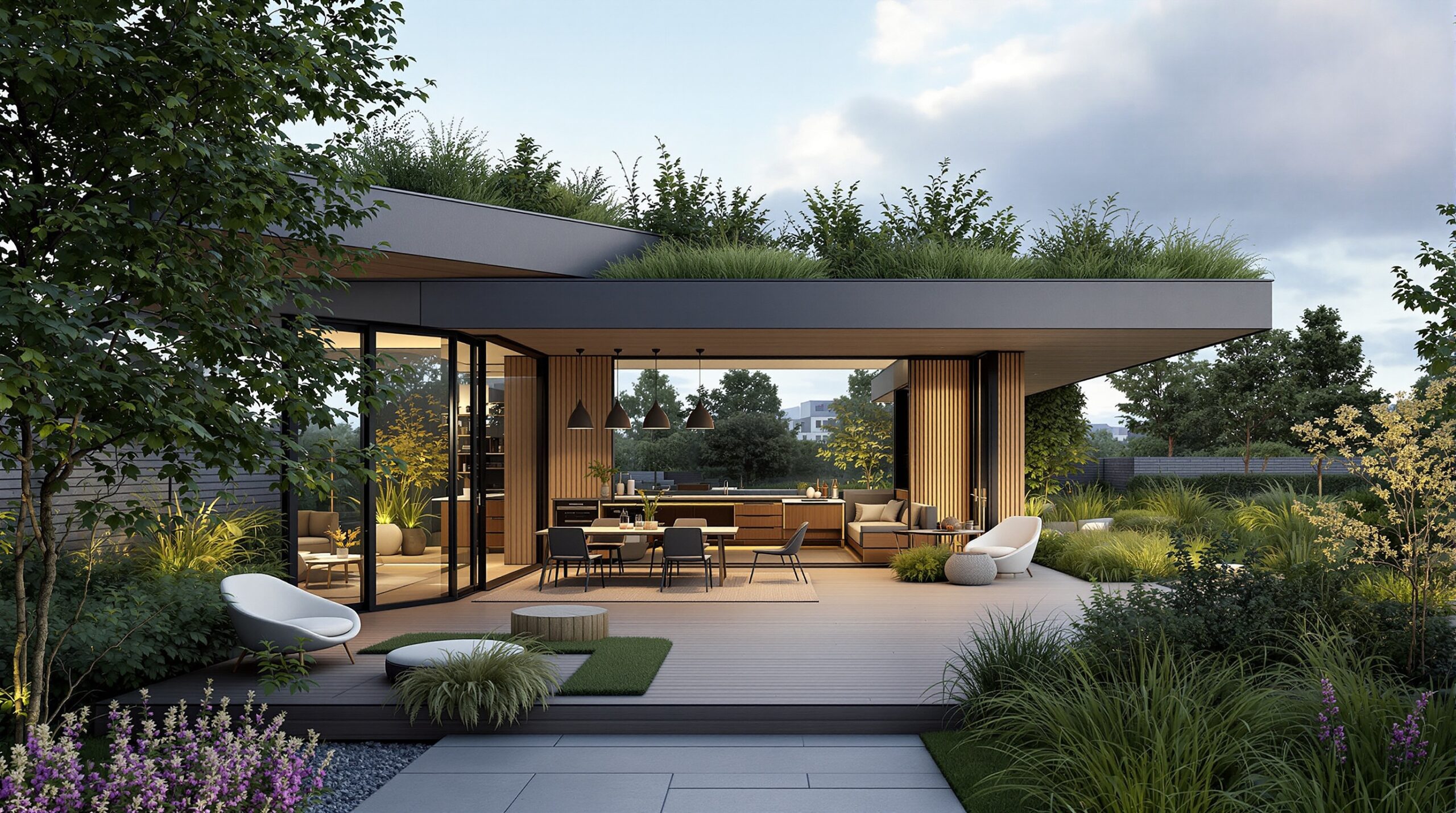
- Green Roofs: A layer of vegetation on your roof provides incredible insulation, absorbs rainwater, and cools the surrounding air through evaporation.
- Phase-Change Materials (PCMs): This cutting-edge technology uses materials that melt and solidify within a comfortable temperature range (e.g., around 23°C). As they melt, they absorb a huge amount of heat from the room, stabilising the climate. They can be integrated into plasterboards or ceiling tiles.
Holistic Design: When Extending or Completely Rebuilding
For those planning a house extension Amsterdam style or a ground-up rebuild, the opportunity is to design for the Dutch climate of the future. This involves orienting the main living areas to the north or east to avoid the harsh afternoon sun, creating a thermal buffer with utility rooms on the south and west sides, and incorporating internal courtyards or light wells that bring in light and air without the heat.
Architects are now using sophisticated modelling software to simulate how sunlight and heat will move through a proposed design throughout the year, allowing them to fine-tune window placement, shading, and thermal mass before a single brick is laid.
Practical Tips for Your Cooling Renovation Journey
- Start with an Energy Advisory Report. Hire a qualified energy advisor (energiedeskundige) to assess your home’s specific weaknesses. They can model which interventions will give you the best comfort return for your investment.
- Prioritise Passive First. Always maximise shading, ventilation, and insulation before considering any mechanical cooling. A well-designed passive home might not need air conditioning at all.
- Professionalise Every Step. From the initial architectural drawings to the installation of specialised blinds or ventilation systems, this work requires certified expertise. Getting it wrong can be costly and ineffective.
- Check Subsidies Early. Look into the ISDE (Investeringssubsidie Duurzame Energie) and local gemeente schemes. Sustainable cooling measures like high-efficiency mechanical ventilation or green roofs may qualify for financial support.
- Think Holistically. A cooling renovation should integrate with your plans for insulation, heating, and hot water. A holistic plan avoids conflicts and ensures all systems work in harmony.
Conclusion: Building Comfort and Resilience
Renovating your Dutch home for heat waves is no longer a luxury or a niche concern; it’s becoming a core aspect of responsible homeownership and future-proofing your property. The best renovation tips Netherlands experts can offer today centre on creating a cohesive system where shading, ventilation, high-performance materials, and intelligent design work together. This approach doesn’t just fight the heat; it builds a more resilient, sustainable, and comfortable home that will stand you in good stead for decades to come, no matter what the climate brings. By investing in these smart upgrades, you’re not just improving a house—you’re securing your own personal oasis of cool.