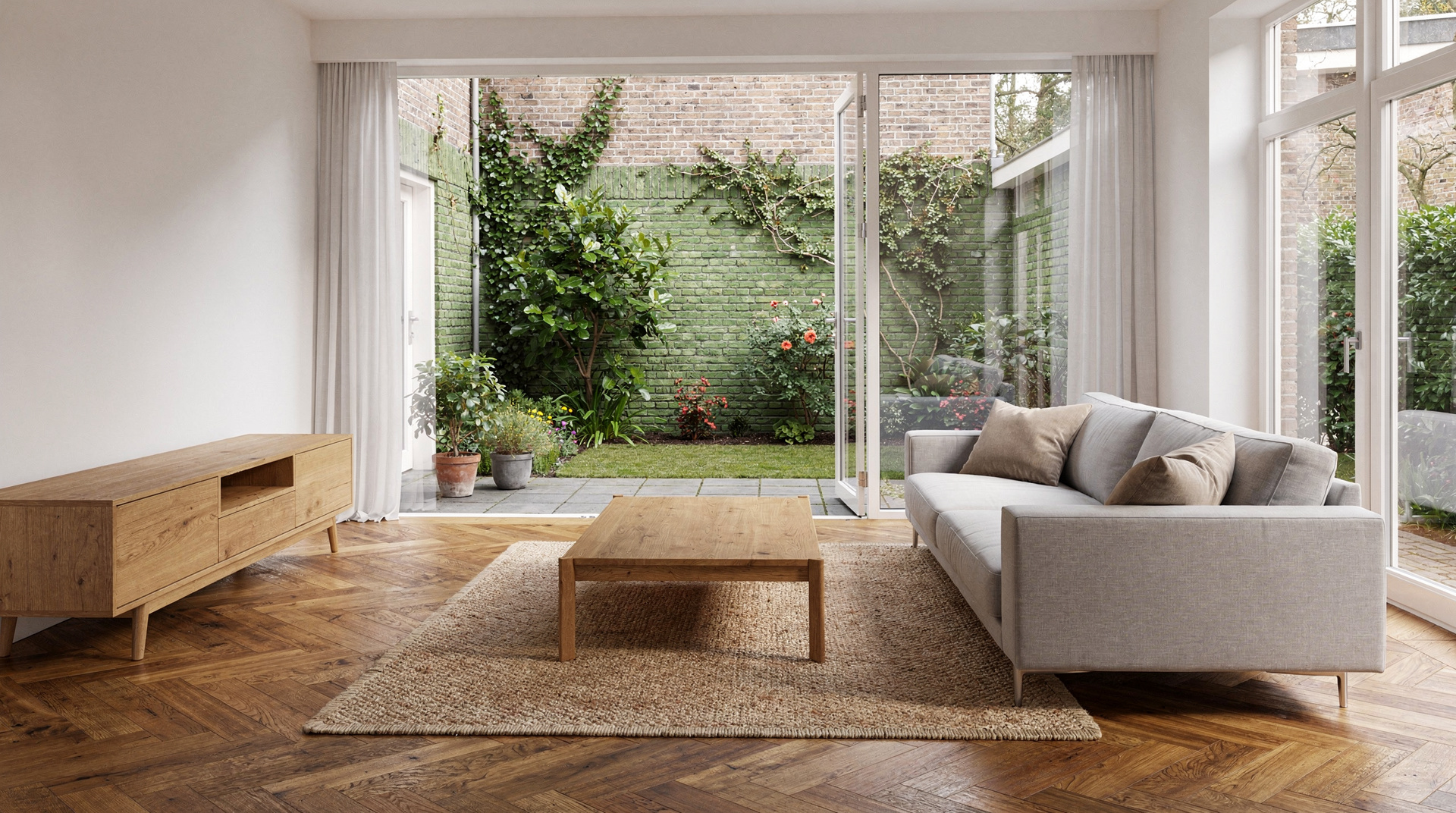
Choosing the Right Parquet Flooring for Timeless Elegance
The best parquet floor is the one that suits your subfloor, heating and daily use, not just the one that looks best in a showroom. Species, construction, pattern and finish all matter, but they only work together when the floor is planned as part of the wider renovation. In Dutch homes, damp winters meet dry, centrally heated rooms, and that contrast decides whether hardwood floors stay flat and quiet for decades.
Parquet also suits the current taste for natural interiors: real wood, calm colours and visible grain. Here is how to choose well, and why the installation matters as much as the timber.
Solid or Engineered: Which Construction Suits Your Home
Solid parquet is cut from a single piece of timber, usually oak. Its main advantage is thickness: it can be sanded back many times, so one floor can last through several decades of wear. Engineered parquet has a hardwood layer glued onto a plywood or softwood core, with the grain of the layers running in different directions. This cross-layered build makes it more stable when humidity changes.
Wood behaves like a sponge, taking up moisture in damp months and releasing it when indoor air is dry. That matters in the Netherlands, where outdoor humidity is high in winter and heating dries the air indoors. Over underfloor heating, engineered parquet is usually the safer choice, and the floor surface temperature is generally kept to around 27°C or lower. Always ask about the thickness of the top layer, because it sets how many times the floor can be refinished.
Patterns, Colours and Flooring Trends Worth Considering
Pattern shapes the character of a room more than most people expect. These are the layouts most often chosen:
- Herringbone: rectangular blocks laid at right angles, a classic that suits both narrow hallways and large living rooms.
- Chevron: blocks cut at an angle so the ends meet in a continuous V, which gives a more graphic, directional look.
- Wide planks: fewer joints and a calmer surface, well suited to open-plan spaces and extensions.
Among current flooring trends, lighter oak tones, matt oiled or lacquered finishes that keep the grain visible, and brushed surfaces that hide fine scratches stand out. Reclaimed timber is used where a worn, characterful look is wanted. Very dark, glossy floors look striking but show dust and marks quickly, so think about how the room is used before choosing.
Why Laying Parquet Flooring Starts With the Subfloor
Laying parquet flooring depends less on the wood than on what lies beneath it. The screed (dekvloer) must be flat, firm and dry. Fresh screed holds water for weeks, so its moisture content is measured and compared with the floor manufacturer’s limit before any wood goes down. Trapped moisture leads to cupping, gaps and, in the worst case, mould. An uneven base shows up later as creaking or a hollow sound underfoot.
The fixing method also has to match the base. Full-surface gluing is often chosen over underfloor heating because it carries heat well, while floating installations suit other situations. Expansion gaps at the walls, the order of plastering and painting, and the final floor height at door thresholds all need to be settled together. That is why a floor belongs in the renovation schedule rather than being added at the end. In an apartment, the owners’ association (VvE) may also set limits on impact noise, which affects the underlay.
Wood Floor Maintenance Through the Dutch Seasons
Good wood floor maintenance is mostly climate control. Aim to keep indoor relative humidity at roughly 40 to 60 per cent, which limits the seasonal gaps that open up in winter. Felt pads under furniture, a doormat at the entrance and damp, not wet, cleaning with a product made for the finish cover most daily care.
The finish decides the long-term routine. Oiled floors need periodic re-oiling but can be repaired in small areas. Lacquered floors resist stains well, yet once worn through they usually need recoating across the whole surface. Deeper restoration is work for professionals, because sanding removes part of a limited wear layer. On an engineered floor, cutting too deep exposes the core and cannot be undone.
What to Settle Before You Order Parquet
- Check whether the room has underfloor heating before you choose between solid and engineered construction.
- Ask for the thickness of the hardwood wear layer in writing.
- Have the subfloor measured for moisture and flatness before the floor is ordered.
- Read your VvE rules on impact noise if you live in an apartment.
- Match the finish to your household: oil for easy local repair, lacquer for stain resistance.
- Ask for proof of responsible forestry certification for the timber.
- Keep a few spare boards from the same batch for future repairs.
- Schedule the floor after plastering and painting, so the new wood is not exposed to site damage.
At CBS Renovation in Breukelen, a parquet floor is planned together with the screed, heating and finishing work of a house renovation or extension, so moisture readings and floor heights are settled before the first board arrives.