VAT on Renovation Labour in the Netherlands: What Qualifies for 9%
The Dutch reduced VAT rate of 9% does not cover renovation as a whole. It applies to a short list of jobs on homes that are more than two years old: insulating, painting, plastering and wallpapering. Cleaning inside a home also qualifies, with no age condition. Work that is not on that list, such as building an extension, is charged at the standard 21%.
The rates in this article are those in force in October 2026, as set out by the Dutch tax authority (Belastingdienst) and the VAT Act (Wet op de omzetbelasting 1968). Rules can change, and the rate for a specific job is decided by the quote and, in the end, by the tax authority. Treat this as orientation, not tax advice.
Which Jobs Qualify for the 9% Rate
For a home older than two years, the reduced rate applies to these jobs:
- Insulation: the labour of fitting insulation material to floors, walls and roofs, when the aim is to make the home more energy efficient.
- Painting: the painting itself, plus preparation, pre-treatment and the paint and other materials used.
- Plastering (stucwerk): the plastering, plus preparation and the materials used.
- Wallpapering: hanging the paper, the preparation it needs and materials such as glue. The wallpaper itself is charged at 21%.
Cleaning inside a home is also charged at 9%, and here the home does not have to be older than two years.
The tax authority draws the line tightly around each trade. Work that sits too far from painting, such as replacing windows, doors and frames, stays at 21%. The same goes for work next to plastering: installing plasterboard walls, tiling walls and laying floors are all at 21%.
Which Homes and Which Age Count
The reduced rate applies to a woning, a building meant for permanent occupation by private individuals. A garage, shed, conservatory or extension on the same plot counts as part of the home. A building used as both a home and business premises gets 9% only on the residential part. Business premises and holiday homes that may not be lived in permanently do not qualify.
The home must be older than two years when the work takes place. The two years start on the date the building was first used as a home. If the home was built in stages, at least half of it must consist of parts older than two years. A newly built home is therefore charged at 21% even for painting or insulation.
If the age is in doubt, the contractor can check the national address and buildings register (BAG) or ask the client to sign a statement that the home is more than two years old.
Materials: Where the Rate Changes Within One Invoice
Insulation is the case where labour and materials part ways. The labour is charged at 9%, but the insulation materials, such as mineral wool, PIR boards or glass, are charged at 21%, even when the contractor makes the materials in their own business. Demolition before insulating work is also at 21%.
For painting, plastering and wallpapering the materials follow the work and fall under 9%, apart from the wallpaper itself.
What Stays at 21%
The tax authority states that work on homes other than the jobs listed above is charged at 21%. In practice that includes:
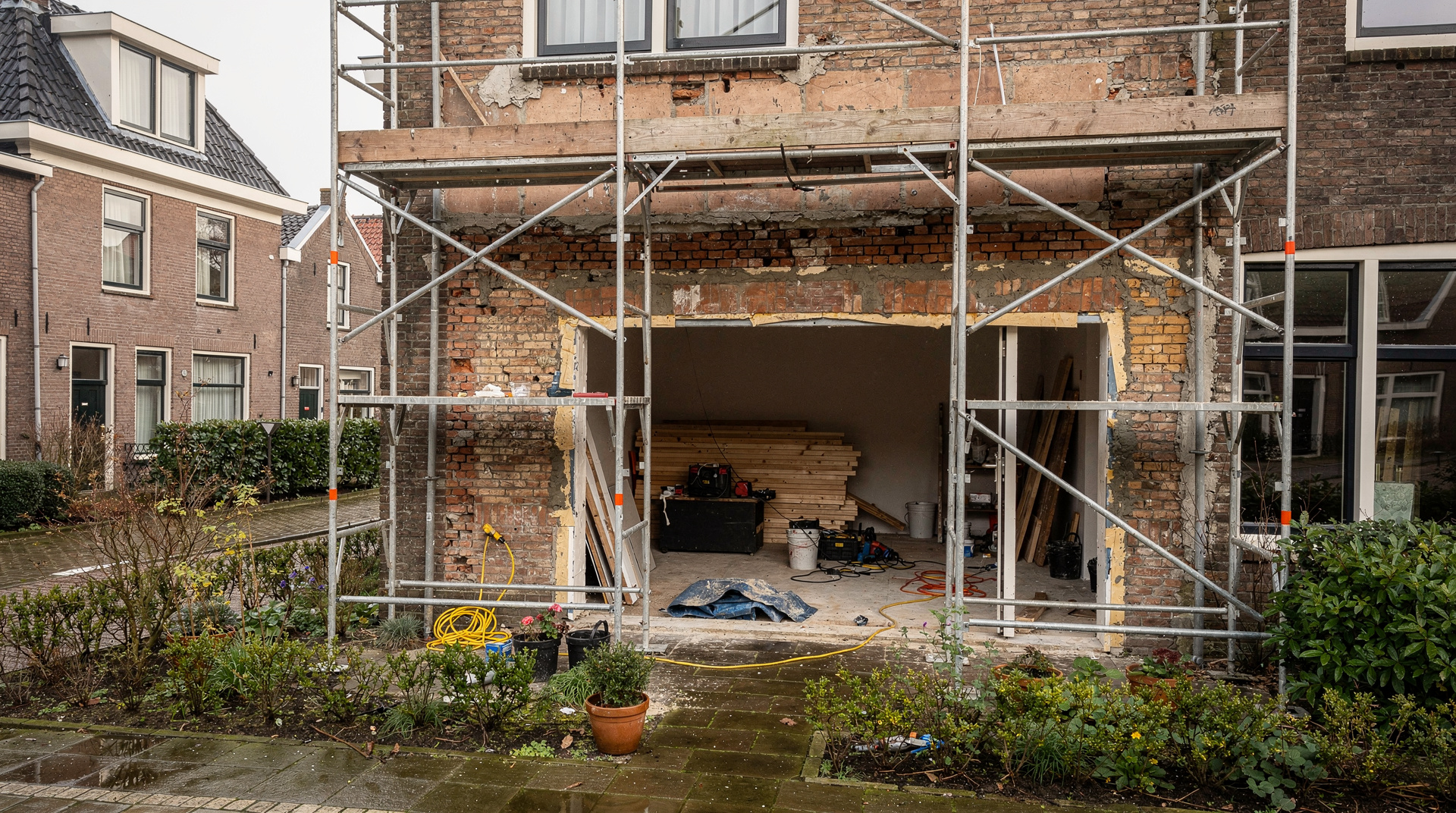
- building an extension, as it is not insulating, painting, plastering or wallpapering;
- building a dormer, installing sun shading and replacing windows, doors and frames;
- installing a heat pump, a home battery or solar thermal collectors.
Solar panels are the exception in the other direction. Supplying and installing them on or at a home is charged at 0%. Panels with more than one function, such as PVT systems, and extras such as strengthening the roof or replacing the whole fuse box are not covered by the 0% rate.
An Example Invoice With Two Rates
Take a house completed in 1962. The figures below are illustrative, not a CBS price list. All amounts exclude VAT:
- Plastering and painting, materials included: €8,000 at 9%, VAT €720.
- Roof insulation, labour only: €3,000 at 9%, VAT €270.
- Roof insulation, materials: €2,000 at 21%, VAT €420.
- Demolition before the insulation work: €1,000 at 21%, VAT €210.
The total is €14,000 plus €1,620 VAT, or €15,620. At 21% on every line the VAT would be €2,940, so the reduced rate saves €1,320 here. The saving depends on how much of the project is work from the 9% list.
Check Your Quote Before You Sign
- Confirm that the home is more than two years old, using the date it was first used as a home.
- Ask for work at 9% and work at 21% on separate lines. The tax authority expects the contractor to split them when the work is part of a larger project.
- For insulation, ask for labour and materials as separate lines, each with its rate.
- Ask the contractor to state which rate applies to each line.
- Expect to sign a statement on the age of the home if the contractor asks for one.
- Keep the quote and every invoice.
CBS Renovation, based in Breukelen and working in het Gooi and the Utrecht area, prepares an itemised quote after viewing the property, with one contact for the whole project. For a whole-house renovation that makes it easy to see which lines are labour, which are materials and which rate the contractor has applied to each.