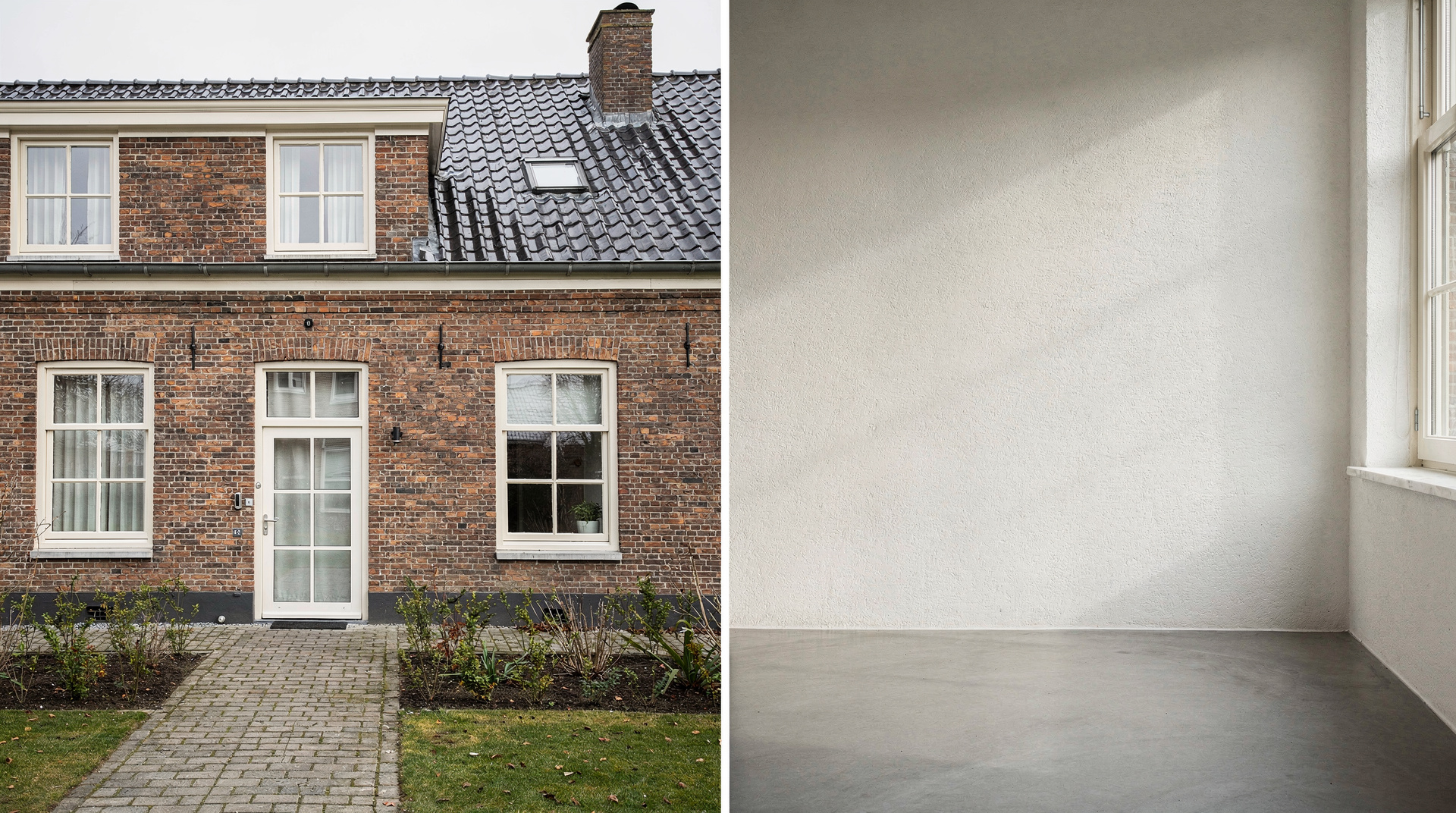
Stucco vs. Microcement: Which Wall Finish is Right for You?
Stucco and microcement both give a wall a smooth, continuous surface, but they behave very differently once the work is done. Gypsum stucco is a soft, breathable plaster that suits dry living areas and takes paint well. Microcement is a thin, hard, cement-based coating that, once sealed, copes with water, which is why it appears in showers and bathrooms. The right choice depends on the room, the condition of the wall and the look you want.
A note on terms: in English, stucco often means an exterior cement render. In the Netherlands, stucwerk is interior plastering, usually with gypsum, and that is the meaning used here. It is the most common form of plastering works in Dutch homes.
What Stucco and Microcement Are Made Of
Gypsum stucco is applied in one or two coats, a few millimetres thick, over a prepared wall. It sets through a reaction with water and then dries. Because it is vapour-open, it takes up and releases small amounts of moisture, which suits normal living rooms. It softens if it stays wet, so it is not a finish for shower walls.
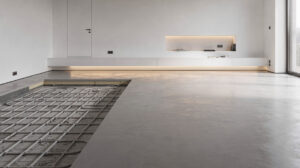
Microcement is a mix of cement, fine aggregates, polymer resins and pigments. It goes on in thin layers, around 2–3 mm in total, usually over a primer and often a reinforcing mesh. A sealer on top gives water resistance and sets the final sheen. Some sealers are solvent-based and release vluchtige organische stoffen (volatile organic compounds) while they cure, so the type of sealer matters for indoor air.
Where Each Finish Works Best
Moisture is the main dividing line, followed by appearance. For most Dutch homes, the split looks like this:
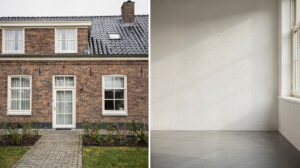
- Stucco: living rooms, bedrooms, hallways and ceilings. It levels uneven brick and block walls, such as those in older terraced houses, and it is the usual base for paint.
- Microcement walls: bathrooms, walk-in showers, kitchen walls and feature walls, where a joint-free surface is wanted.
For modern textures, microcement gives a soft, cloudy, concrete-like look, with subtle tonal variation from the trowel work. Stucco can be left smooth or given a fine texture, but its look is calmer and more uniform. Microcement is also more labour-intensive to apply, so it normally costs more per square metre than plain gypsum plastering.
Why Microcement Depends on the Wall Beneath It
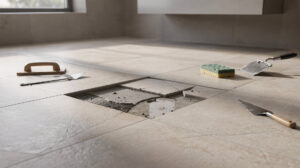
A coat only a few millimetres thick cannot hide a poor surface. Cracks, loose plaster or damp in the wall can show through or cause the coating to fail. Older Dutch houses often have walls that have moved slightly over decades, so the substrate has to be assessed first. In many wall finishing projects, stucco is applied as a levelling base and microcement goes on top once it has fully dried.
Timing is the other reason this work is left to trained plasterers. Each layer needs to cure before the next, and the sealer must go on in suitable temperature and humidity. Errors usually show later as patchy colour, soft spots or a sealer that wears early. For that reason, CBS Renovation plans wall finishes as part of a wider project, such as a bathroom, a whole-house renovation or an extension, so that plumbing, electrics and tiling are finished in the right order.
What to Decide Before Choosing a Wall Finish
- Establish how much water the wall will meet. Showers and splash zones point to microcement; dry rooms point to stucco.
- Have the wall checked for cracks, damp and flatness before choosing a finish.
- Decide how much colour variation you accept. Microcement is meant to look hand-finished, not uniform.
- Ask which sealer will be used and how it affects odour and air quality during curing.
- Schedule wall work after rough plumbing and electrics, and before final floors and fittings.
- Allow for drying time between layers, especially on new plaster.
- Plan aftercare: use gentle, non-abrasive cleaners and expect to renew the sealer over the years in wet areas.
In a typical Dutch terraced house, smooth stucco in the living areas and microcement in the bathroom is a practical pairing, with both finished in one planned sequence.