Exterior Painting to Protect Your Home Against Dutch Winters
Exterior painting in the Netherlands does more than freshen up a house. A good paint system is the first layer of weatherproofing. It keeps rain out of wood, render and brick while letting moisture inside the wall escape. Paint applied at the wrong time or to the wrong surface does the opposite, and the damage often shows only after the first hard winter.
The reason lies in the climate. Dutch winters are damp rather than extremely cold, so walls stay wet for weeks, freeze overnight and thaw by afternoon. That cycle does most of the harm to facades, which is why facade protection is mostly about managing water.
Why Dutch Winters Are Hard on Paint and Brickwork
Water expands by about 9 per cent when it freezes. If a porous brick or render surface is saturated, repeated freezing pushes the outer layer apart. The result is spalling (the face of a brick flaking off), crumbling pointing and loose render. Wind-driven rain from the south-west makes this worse on exposed walls, especially in open polder landscapes and near the coast.
Timber is vulnerable in a different way. Window frames, fascias and eaves take in water at joints and end grain. Once the paint film cracks, the wood swells, the coating lifts and rot starts from the inside, where it cannot be seen.
Choosing Paint That Lets Walls Breathe
Brick behaves like a firm sponge: it absorbs water and releases it when the air dries. A tight, film-forming paint on masonry traps the moisture already in the wall. The paint then blisters and peels, and the wall stays wet for longer. For masonry maintenance, the right choice is a vapour-open product, such as a mineral or silicate paint or a masonry paint made for the purpose.
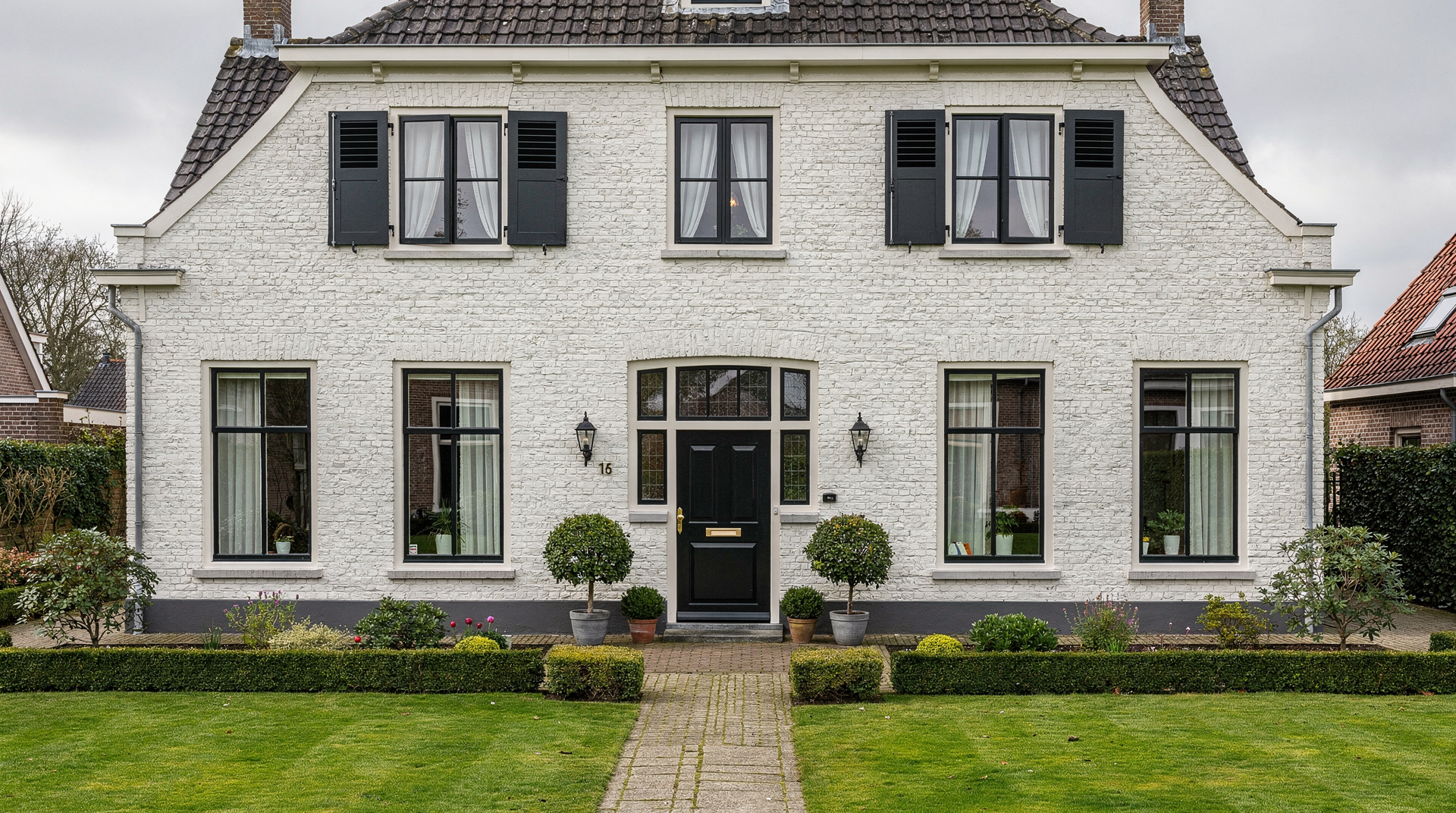
Many brick facades do not need paint at all. Repointing and a water-repellent treatment that stays vapour-open often protect the wall better, and they can be reversed, which painted brick cannot. On timber, the better systems stay flexible so they can move with the wood. Very dark colours on sun-facing frames heat up more and put extra stress on the coating.
Why Preparation Decides How Long the Paint Lasts
Most failures trace back to what happened before the first coat. Algae and moss must be removed, loose paint taken off, pointing and cracks repaired, and rotten wood replaced. The wall also has to be dry enough to take the paint. Coatings generally need dry weather and temperatures above about 5°C, so exterior work is planned for spring through early autumn.
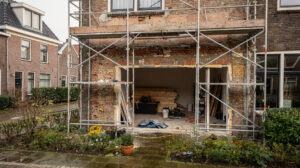
This is where professional judgement matters. Moisture readings, compatibility with old paint layers and safe access with scaffolding all affect the outcome. Houses built before the 1960s may also carry old paint containing lead, which has to be removed and disposed of in a controlled way. Working at height on upper storeys adds a further safety requirement.
Where Exterior Painting Fits in a Larger Renovation
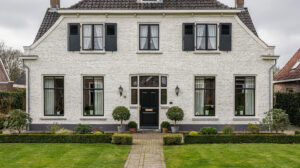
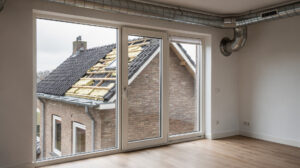
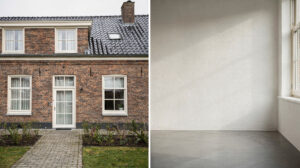
At CBS Renovation, exterior painting is carried out as part of a wider project, such as facade renovation, a whole-house renovation or a house extension. The combination makes practical sense. New window frames, extra insulation or an extension all disturb the facade, and painting afterwards gives old and new work a consistent finish. That consistency is also what lifts curb appeal most noticeably.
Check the rules before changing a colour. In a protected townscape, or on a listed building, altering the look of a facade may require an omgevingsvergunning (environmental permit). Municipal welstand rules, which set aesthetic standards for an area, can also limit colour choices.
What to Settle Before Facade Work Is Planned
- Inspect the facade after winter for cracked pointing, damp patches, green growth and peeling paint, and photograph what you find.
- Find out whether your home is a monument or lies in a protected area before choosing a new colour.
- Decide whether the brick should be painted, or only repaired and treated.
- Ask for a vapour-open system on masonry and a flexible system on timber.
- Combine painting with other planned work, such as new frames or an extension, so scaffolding is needed only once.
- Schedule the work for spring or early autumn.
- Judge colour samples in daylight, on the actual wall.
If your facade shows cracked pointing or flaking paint this spring, raise it while planning the wider renovation, so repairs, scaffolding and paint happen in the right order before next winter.