Choosing Between Pile and Strip Foundations
When planning to build a new house or complete a home extension, a solid foundation is essential to both the project’s success and the building’s safety. Selecting a construction that is stable in your area is crucial because different countries have different types of soil. Pile and strip foundations suit different ground, and the right one for your plot depends on the soil and the load it has to carry.
What Are Pile Foundations?
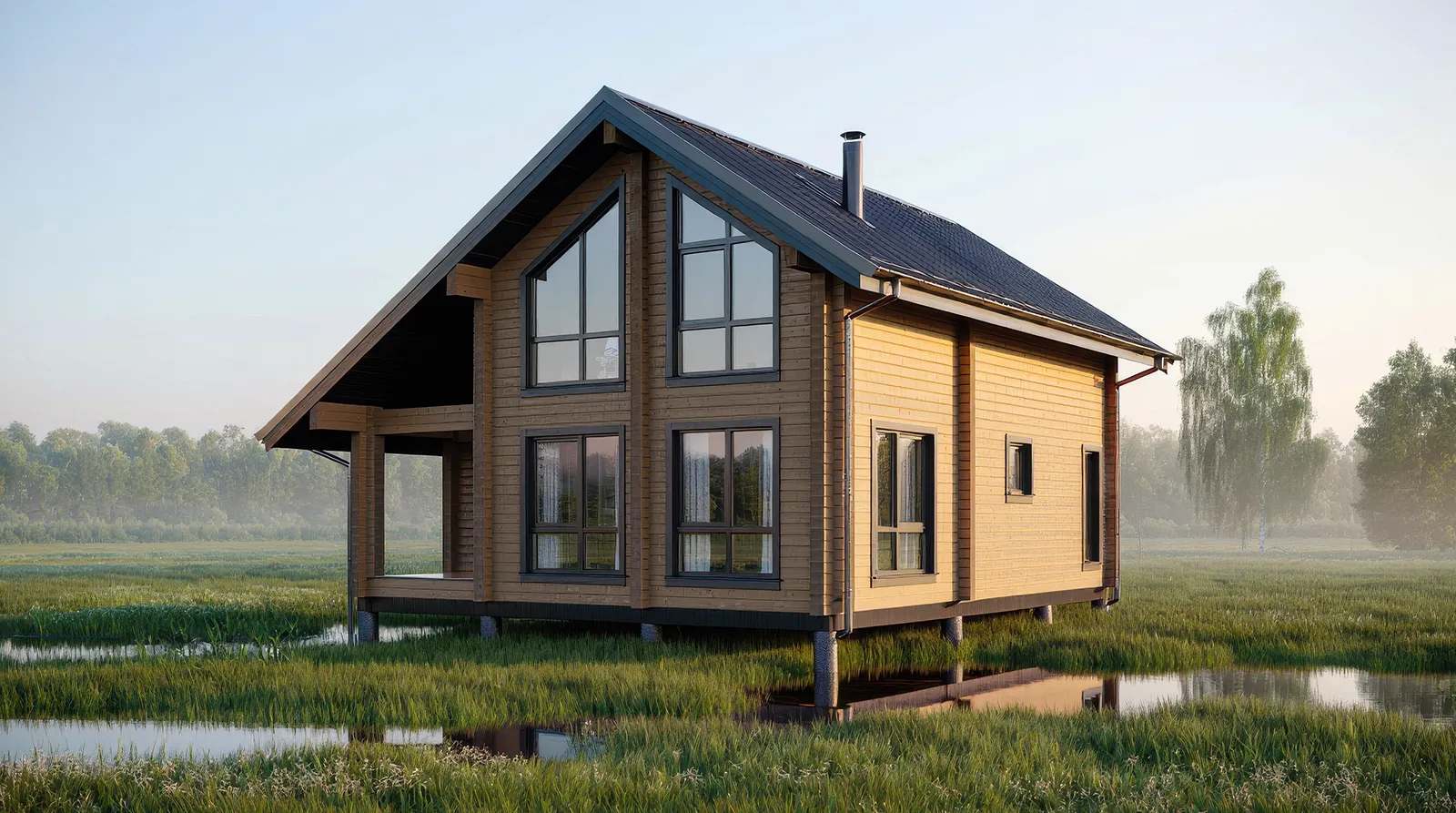
They are structures made of freestanding piles combined into a single grillage structure. This type is primarily used in the construction of buildings on weak, water-saturated soils. Its use reduces the amount of earthworks and concrete consumption.
A few things you need to know about piles used in different locations:
- One of the most popular and reliable types is precast concrete piles.
- Bored piles are often chosen when their installation could damage adjacent structures.
- Screw piles are not suitable for heavy structures and are a great option for small wooden houses.
- Vibrating piles are generally not suited for historic centers, where vibrations can damage neighbouring buildings.
The basic structural components of pile foundations are piles. Depending on the material used, they can be wooden, stone, brick, or reinforced concrete.
The finished pile, manufactured in a factory, has a sharp end with which the pile is immersed in the ground. They are lowered into the ground using specialized equipment. Piles made directly in the ground are placed in the cavities of wells.
They are separated into two categories according to how the piles affect the ground:
Pile-stands – when reaching a solid layer of soil, the piles rest against it, ensuring the strength of the building.
Suspended piles – due to friction forces between the side walls of the piles and the compacted soil. When it’s difficult to access a solid layer of earth, these piles are used.
- Pros: Stability, suitability for heavy loads.
- Cons: Higher cost, complex installation.
What Are Strip Foundations?
To settle the “pile vs strip foundation” question, the second one needs the same detail. A strip foundation is a type of foundation in which specific strips, 30 to 60 cm wide and deep, are laid around the perimeter of the future building. These blocks form the basis for the walls and ensure an even distribution of the load on the ground.
This construction basis is suitable for different soil types and allows for constructing houses on uneven ground without additional site preparation. As a result, modular houses on strip foundations can be built in almost any environment.
The installation process is rather fast and does not require a large amount of building material compared to other types of frames. This is especially true for the construction of modular buildings, where every detail matters to meet tight construction deadlines.
- Pros: Cost-effective, quick to install.
- Cons: Limited use in unstable soils.
Factors to Consider When Choosing
If we compare the characteristics of both foundations, we can conclude that the choice of a particular structure depends on the conditions of the land plot and the type of building.
The strip base is used on stony soils, while the pile analog is used on marshy soils. Uneven terrain is used to mount a pile field. If you need to equip a basement, a concrete strip is poured. A monolithic base is required for brick and block houses so that the masonry does not crumble due to uneven foundation shrinkage.
If you can choose any type of foundation, experts from CBS Renovation recommend comparing the performance characteristics of these structures and possible financial costs. The only way to reduce the cost of the strip option is to save on materials (concrete grade or reinforcement thickness), which will lead to a decrease in the strength of the structure.
So, what is the difference between a pile and a strip foundation? When selecting the best option for your business, don’t forget to consider these factors:
- Soil Type
A pile foundation allows for the most efficient use of soil resources under a building. By using piles, a building can be constructed on a smaller land area, which saves resources and allows for more economical land use.
- Load Requirements
For heavily loaded buildings, such as multi-story or industrial structures, a pile foundation is the best choice because it provides high stability and load distribution. For small residential buildings or cottages, a strip foundation is usually sufficient, as it can withstand lower loads.
- Cost and Budget
When applying a pile foundation, you should expect higher costs. This is because piling requires specialised equipment and skilled crews, while on firm, load-bearing soils a strip foundation is the simpler and cheaper option. On weak or waterlogged soils, however, piles are the reliable choice, because they transfer the load down to a firmer layer.
- Construction Time
If construction has to be completed in a short period of time, a pile foundation can be installed quickly, although it remains the more expensive option. Strip foundations are straightforward to build, but the trenching, reinforcement and concrete curing still take time on site.
When Each Foundation Is the Right Choice
The particular circumstance and the type of soil your home will be built on will determine which of the strip and pile foundations is best. Choosing well means checking the loads, the soil conditions, and the budget.
Choose strip foundation when:
- There are no unusual ground conditions, such as excessive moisture content or wet soil.
- The building is of medium size and load.
- The construction budget is limited.
You should prefer a pile foundation if:
- The ground conditions have peculiarities, such as swampy soil or soil with weak characteristics.
- The building has high loads.
- The construction budget has no tight limits.
If you still have doubts and need more arguments on the topic “strip foundation vs pile foundation,” it might be better to contact professionals who provide foundation design and construction services to get competent advice and determine the best solution for your situation.