Cost-Effective Tile Work: Repairing Cracks Without Replacing the Floor
A tiled floor that cracks a few years after it was laid usually has a reason below the surface: a moving subfloor, heating that warms up too fast or grout that lets water through. In a house renovation in the Netherlands this comes up in old canal houses as often as in a new house extension in Amsterdam. Below: why tiles crack and when a repair is enough instead of a new floor.
Why Dutch Floors Crack: Three Terms
Most cracked floors in Dutch homes come down to one of these:
- Bouwvergunning: A building permit required for major structural changes. While simple tile repair rarely needs one, complete structural floor replacements might.
- Vloerverwarming: Underfloor heating. This is standard in modern Dutch homes and a primary culprit for thermal expansion cracks.
- Ondergrond: The subfloor. In older Dutch properties, wooden subfloors flex, causing rigid surface materials to snap.
The Mechanics of Cracked Tile Repair
Why Do Floors Fracture?
When the substrate shifts or the temperature changes, stress builds up in the tiles. Without expansion joints that stress has nowhere to go, and the weakest tile cracks. Professional tile work addresses the root cause, not just the symptom.
Advanced Repair Techniques
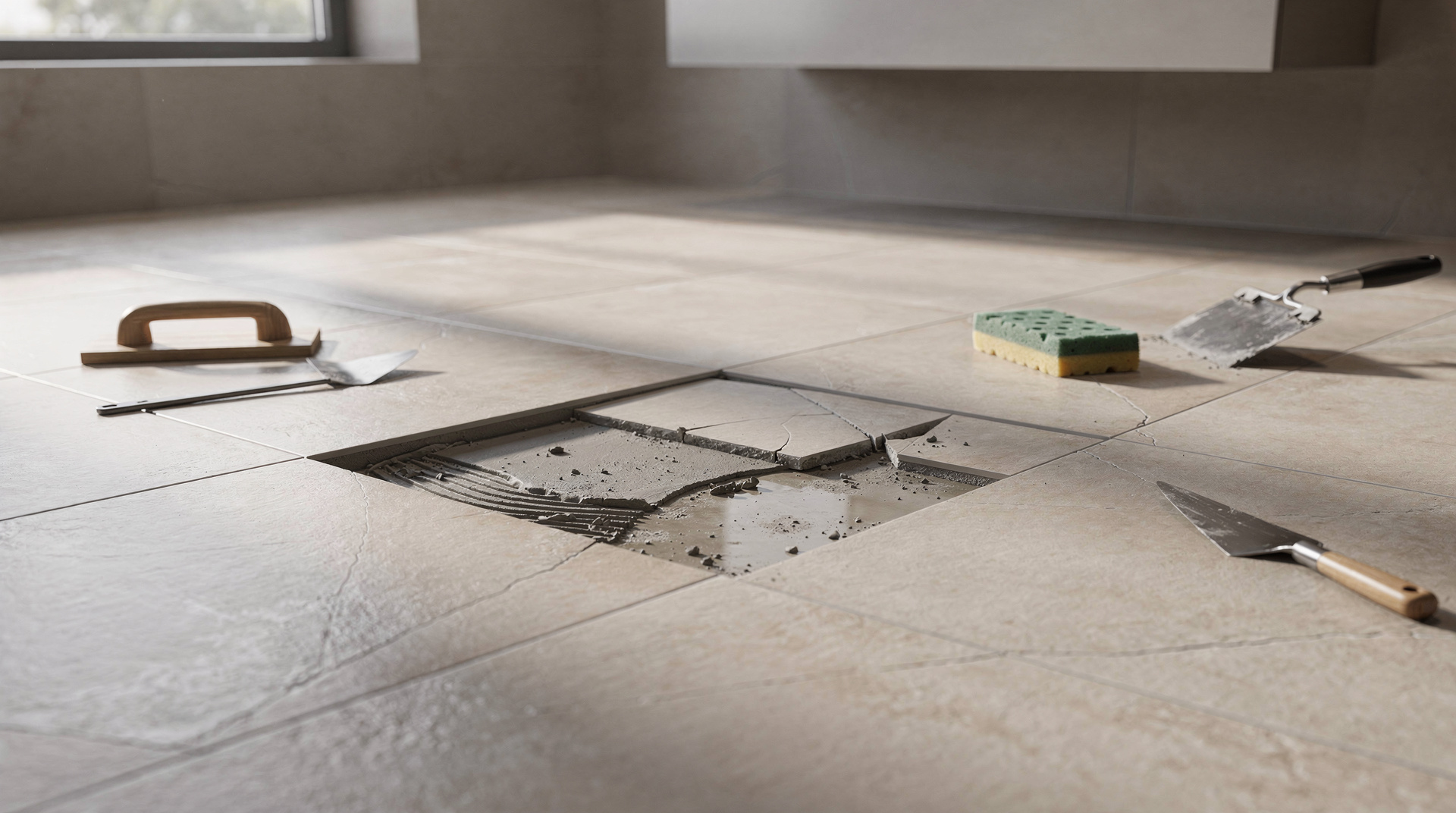
Instead of ripping up the entire surface, experts use specialized epoxy resins to bond fractured pieces. For hairline fractures, color-matched micro-cements fill the void. This approach preserves the original installation while restoring structural integrity.
Materials and Bathroom Maintenance
Water getting under the tiles does its damage slowly. During bathroom maintenance, professionals often find that degraded grout allows moisture to undermine the adhesive layer. Using sustainable building materials, such as bio-based epoxy grouts, prevents future water damage. Proper regrouting seals the grid, blocking moisture and accommodating minor thermal shifts.
Before the Repair: Four Checks
What to check so the repair lasts:
- Hire certified floor services to assess the subfloor stability before attempting any cosmetic fixes.
- Have the floor checked for hollow spots (a tap test or thermal imaging) to find where the adhesive has failed.
- Instruct your contractor to use flexible, sustainable building materials for all regrouting and adhesive applications.
- Commission a professional to recalibrate your underfloor heating system to prevent rapid temperature spikes.
Repair or Replace?
A crack is a symptom. If the cause is dealt with – a stiffer subfloor, a slower heating curve, new grout – a repair can last as long as a new floor. If the subfloor keeps moving, new tiles alone will not help. We carry out tile repairs as part of a bathroom, floor or full home renovation, so the cause and the surface are fixed together.