The 10 dB Rule: Understanding VvE Flooring Requirements in Apartments
In a Dutch apartment building a new hard floor is not only your own business: the owners’ association (VvE) usually sets a minimum for how much impact noise the floor must stop, and the common requirement is 10 dB. If your renovation in the Netherlands includes a new floor in a flat, check this rule before choosing materials.
VvE, Contactgeluid and Other Terms You Will Meet
Three terms come up in almost every apartment floor project:
- VvE (Vereniging van Eigenaren): The homeowners association. They dictate the VvE flooring rules to keep the peace among residents.
- Contactgeluid: Impact noise. The physical sound of footsteps or dropped objects traveling through the floor structure.
- Bouwvergunning: The building permit. A simple floor change does not need one; structural changes may.
The Science of the 10 dB Rule
Why 10 decibels? A 10 dB reduction is roughly what the human ear perceives as half as loud. The VvE flooring rules mandate that any new hard floor must reduce contactgeluid by at least 10 decibels compared to the original concrete or wooden subfloor. This ensures that a heavy footstep above does not sound like a drumbeat below.
Choosing the Right 10dB Underlay
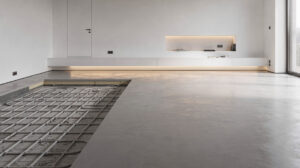
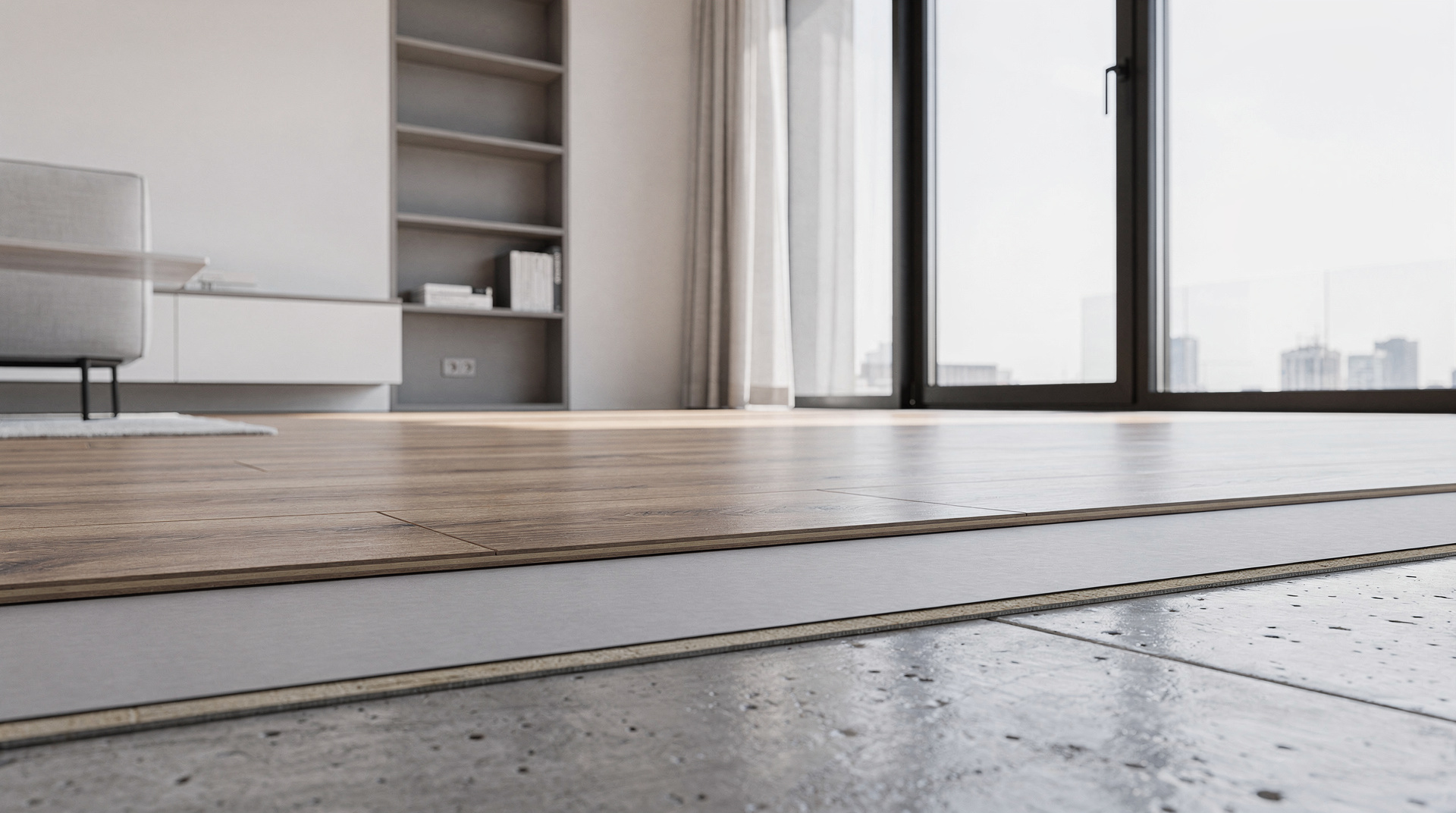
When laying laminate flooring or engineered wood, the underlay acts as a shock absorber. A high-quality 10dB underlay contains dense, porous materials that trap sound waves before they vibrate through the ceiling below. Using sustainable building materials here, like recycled rubber or natural cork, offers excellent acoustic dampening while reducing your carbon footprint.
Why Professionals Are Non-Negotiable
Installing an acoustic floor yourself is risky, because small mistakes undo the rating. If a 10dB underlay touches the skirting board or wall, it creates a flanking path, transmitting sound directly into the building structure. Professional installers use specialized perimeter strips to ensure the floor floats completely free from the walls, so the acoustic rating holds when it is tested.
Steps to Get Your Floor Approved
Four steps that keep the project in line with the VvE rules:
- Request the official acoustic certificate from your chosen flooring supplier before purchasing any materials.
- Hire a certified professional to install the floor and verify the perimeter isolation.
- Ask your installer to provide a post-installation acoustic test if the VvE demands concrete proof.
- Consult your VvE board in writing before starting any demolition work.
Quiet Floors Keep the Peace
Whether a new floor in a flat is accepted depends on two things: a certified underlay and correct installation. Get both right and the floor will meet the VvE rules and keep the peace with the neighbours below.