Designing the Ideal Home Office in 2026
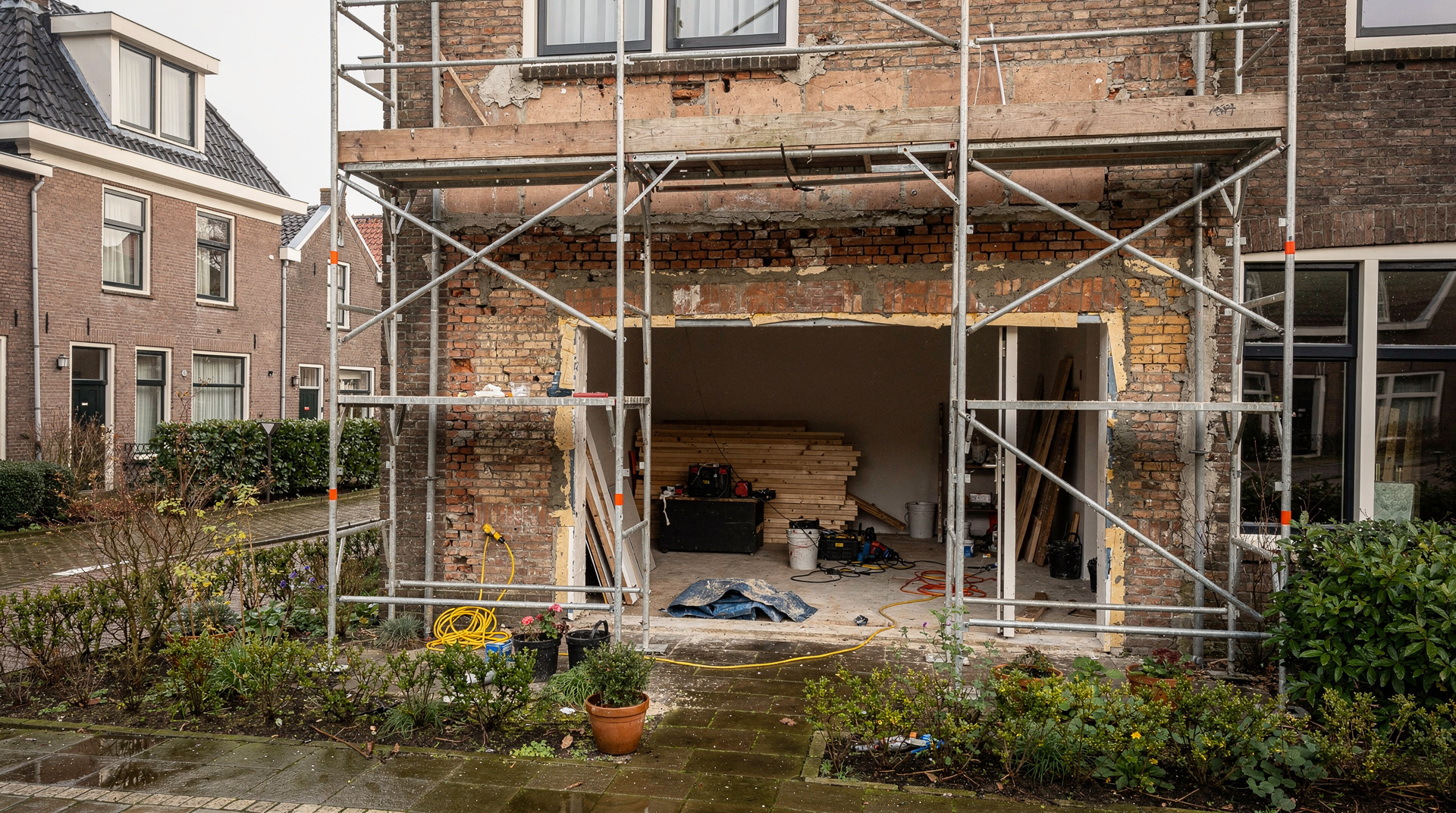
For millions of Dutch workers the morning commute is now a short stroll across a hallway, coffee in hand, with no train to catch and no rain to battle through. This is no longer a temporary pandemic fix. Hybrid work has hardened into permanence, and the home office has evolved from a folding table in the corner into an architectural priority. Yet here is the catch: many Dutch homes were never designed to host a professional workspace. They are narrow, vertically stacked, and often as tightly packed as books on a shelf. Carving out a quiet, productive workspace without turning the living room into a storage closet takes structural work, not decoration. Across the Netherlands, homeowners are turning to house extensions, complete renovations, and smarter construction methods to build offices that work.
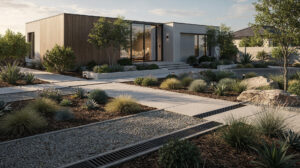
The house extension Amsterdam style project has become a blueprint for other cities. A house renovation Netherlands wide often starts with a single question about workflow, and understanding your bouwvergunning can save you an expensive rewind. Sustainable building materials turn home offices into healthy, energy-efficient rooms, and the interior design trends 2025 are spilling into 2026. A modest garden room and a full gut renovation both come down to physics, finance, and a fair bit of Dutch municipal paperwork.
Decoding the Dutch Renovation System
Before you sketch a single floor plan, you need to understand the local rulebook. Think of Dutch building regulations as the operating system of your project: invisible to the naked eye, but nothing functions without it. If you are new to renovation, the terminology can feel like a foreign language inside a foreign language. Here are the essential concepts.
- Omgevingsvergunning: This is the modern successor to the classic bouwvergunning. It is the permit you need from your gemeente (municipality) to build, alter, or extend a structure. Not every home office requires one, but if you are pushing out a wall, raising a roof, or changing the facade, you are almost certainly in permit territory. Applying without one is like driving without a licence: technically possible for a few metres, but catastrophically risky. The Omgevingswet, which came into force to simplify regulations, now bundles spatial planning, environmental impact, and building codes into a single application process.
- Bestemmingsplan: Every plot of land in the Netherlands has a zoning plan that dictates what can be built and where. It is the invisible fence around your property. Your dream of a glass-box office cantilevering over the pavement might collide with a plan that says no. In historic centres like Amsterdam or Leiden, these plans are especially strict to preserve streetscapes.
- Energielabel: Since the Dutch government is pushing hard for energy efficiency, many renovations must improve a home’s energy rating. Adding an office often means adding heating, cooling, and lighting load, so your existing insulation and windows may need an upgrade to keep the label from slipping backwards. A poor label can affect resale value and mortgage options.
- Monumentenstatus: If your home is a protected monument, your freedom to renovate shrinks dramatically. Think of it as living inside a museum exhibit: beautiful, but every change requires approval from the heritage authorities. Even replacing a window frame can require months of consultation.
- Aannemer and Architect: An aannemer is your contractor; the architect is your designer. In the Netherlands, complex projects legally require a professional design. Even where not mandatory, hiring both is essential. This is not a job for enthusiastic amateurs with a toolkit. Structural calculations, fire safety, and soil stability are domains where formal training is non-negotiable.
- WOZ-waarde: This is the municipal property valuation. Significant extensions and renovations can trigger a reassessment, which in turn affects your property taxes. It is worth factoring this long-term cost into your budget from day one.
Why a House Extension Is Often the Only Logical Move
The classic Amsterdam canal house, the post-war rijtjeshuis in Utrecht, and the interwar villa in The Hague all share a common trait: they were designed for a pre-digital world. Bedrooms are small, closets are rare, and spare rooms are usually occupied by children, laundry machines, or both. Turning a dining nook into a Zoom studio might work for a week, but after six months of camera angles that reveal your laundry rack, the illusion cracks. That is why the house extension Amsterdam model has become a national reference point.
Extending a house in the Netherlands is like grafting a new branch onto an old tree. It must respect the existing structure while introducing new life. Homeowners are exploring three main strategies.
The Rear Extension and Garden Room
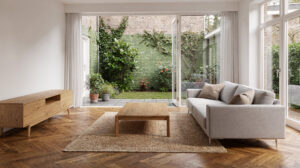
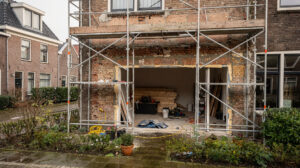
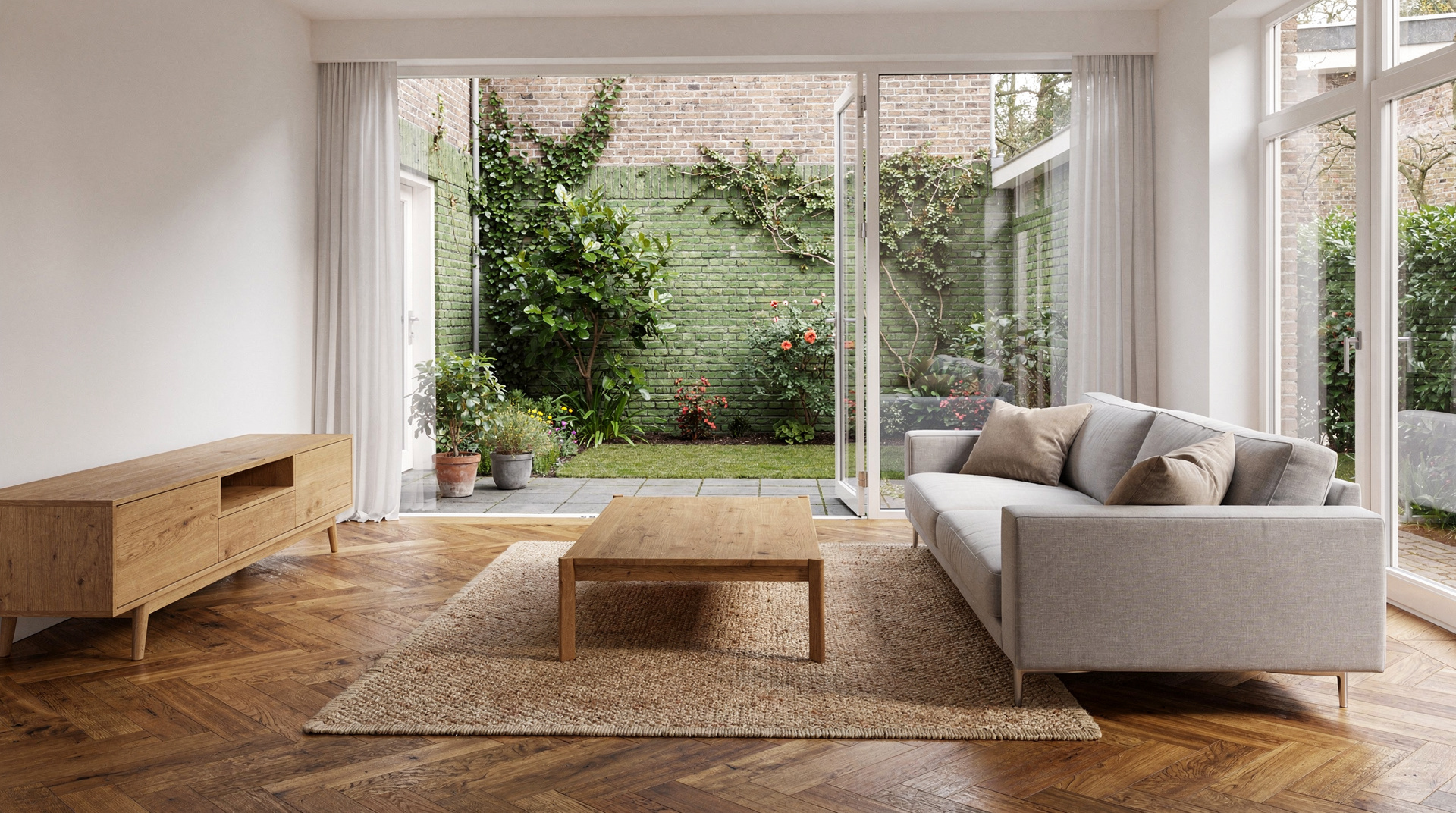
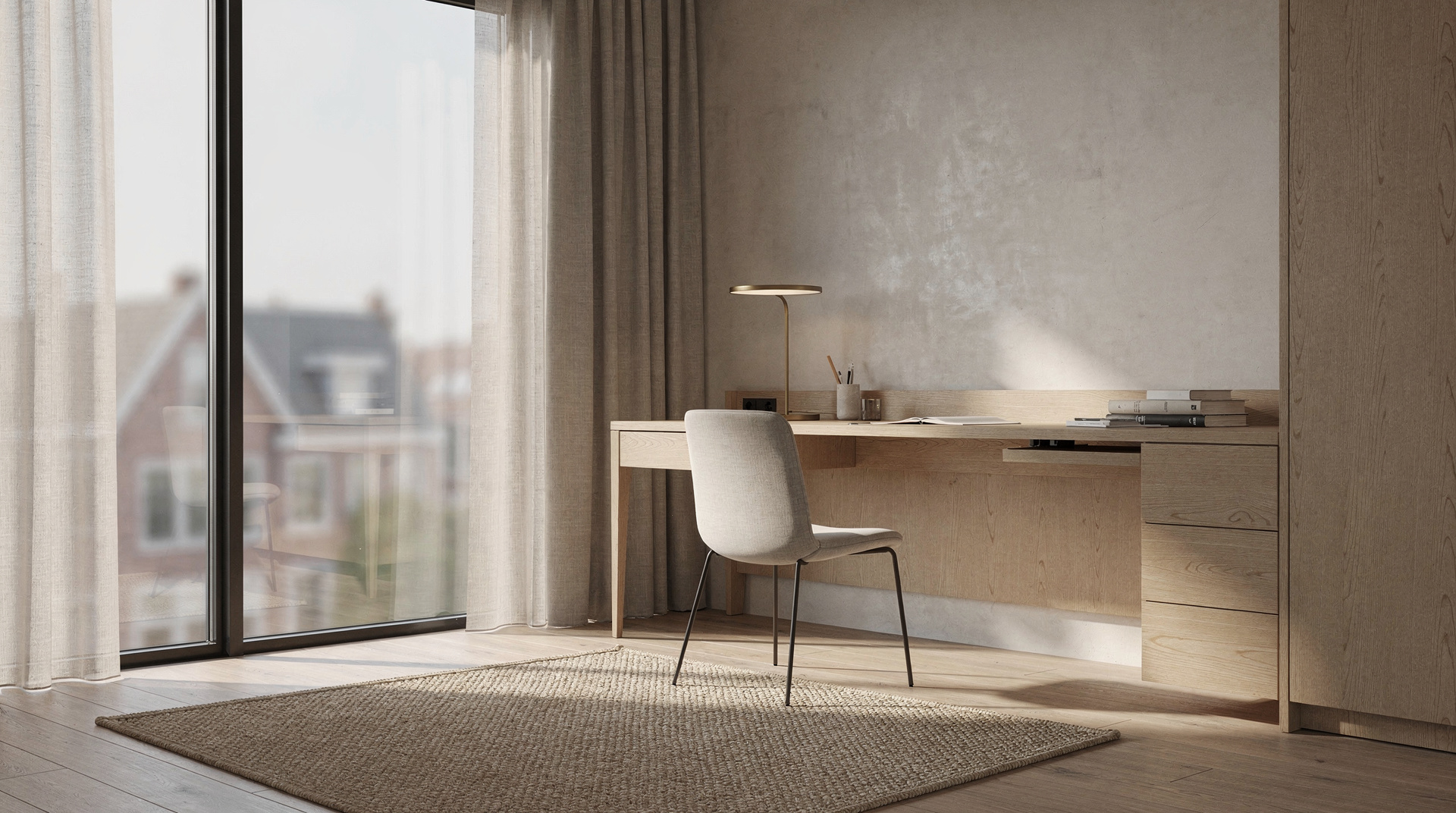
In dense cities where side space is nonexistent, the garden often becomes the release valve. A rear extension can add ten to twenty square metres, enough for a proper office with storage and a door that closes. Modern interior design trends 2026 favour floor-to-ceiling glazing framed in slim aluminium or timber, blurring the boundary between desk and garden. But glass boxes are poor insulators unless specified correctly. Triple glazing is now the standard for these projects, and underfloor heating prevents the space from becoming a greenhouse in July and an icebox in January.
There is also the question of the foundation. The Netherlands is famous for water management, and much of the country sits on soft peat or clay soil. Adding weight to the rear of a house without understanding the ground beneath it is like stacking books on a sponge. A structural engineer must assess whether the existing foundation can carry the new load or whether mini-piles need to be driven to stabilise the extension. Remember, any structure occupying more than half your garden or exceeding height limits will trigger a bouwvergunning review.
The Loft Conversion
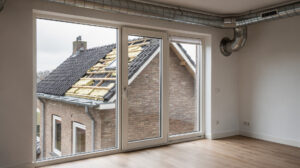
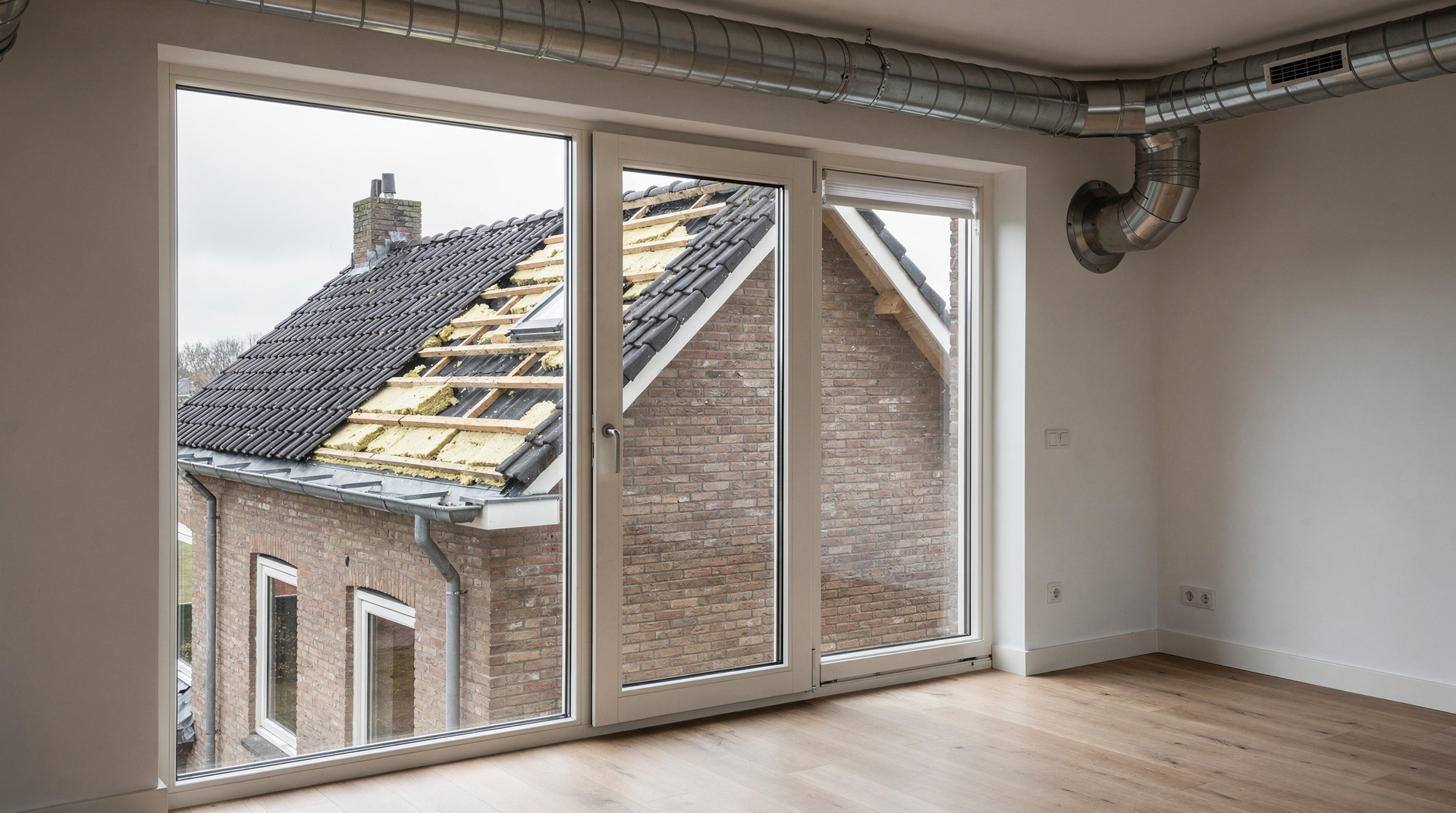
Why build out when you can build up? The dakopbouw, or roof extension, is a favourite in cities where gardens are sacrosanct. A dormer window transforms a dark attic into a light-filled studio. It is the architectural equivalent of finding an extra room in your pocket. However, roof structures in older homes are rarely designed to carry the load of a habitable floor. You will need a structural engineer to calculate whether the joists can support plasterboard, insulation, and a desk full of equipment. This is precisely why professionals matter: a miscalculation here does not just produce a wobbly shelf; it risks the integrity of your roof.
Loft offices present thermal challenges of their own. Heat rises, and an attic can swelter in August. Proper ventilation, solar-reflective roof tiles, and high-grade insulation are essential. A professional architect will also ensure the stair access meets building codes, because a steep ladder might look charming but is illegal for a permanent workspace.
The Side Infill
On corner plots or wider terraces, the gap between houses can be exploited. These narrow side extensions are technically challenging but can deliver a private office without sacrificing garden space. Because they often alter the silhouette of the building, they almost always require municipal approval. The bestemmingsplan will dictate how far you can encroach, and neighbours have a right to object if their light or privacy suffers. Professional mediation and precise drawings can prevent disputes before they arise.
Complete House Renovation: When the Office Is Just the Beginning
Sometimes adding a room is like plugging a leak with sticky tape: it works temporarily, but the pressure builds elsewhere. A house renovation Netherlands specialists often see begins with a request for an office and ends with a whole-home overhaul. Why? Because modern work requires infrastructure that old homes simply do not possess.
Consider the electrical demand. A 1950s house might have been wired for a vacuum cleaner and a television. Today, a home office can contain two monitors, a laser printer, a video light, and a kettle, all drawing power simultaneously. The existing circuits may not cope. Similarly, adding a heated office to a home with a decades-old boiler is like attaching a new limb to a tired heart; the system strains. Complete renovation allows you to install a heat pump, upgrade the meter box, and rewire for fibre-optic internet all at once.
The Open-Plan Dilemma
One of the loudest debates in modern interior design Netherlands circles is whether to keep spaces open or restore walls. Open-plan living has dominated magazines for years, but hybrid work demands acoustic privacy. The 2026 ideal is neither a bunker nor a warehouse. Designers are creating “broken plan” layouts using glazed partitions, sliding doors, and built-in joinery to separate the office visually while preserving the flow of daylight. It is a bit like wearing noise-cancelling headphones: you stay in the room, but the distractions fade.
Asbestos and Legacy Hazards
Homes built between the 1940s and 1990s in the Netherlands frequently contain asbestos in floor tiles, roofing, or pipe insulation. Disturbing these materials during renovation releases dangerous fibres. By law, asbestos removal must be carried out by certified professionals. This is not a corner to cut. A complete renovation gives you the chance to identify and eliminate these hazards comprehensively, rather than hiding them behind new plasterboard.
Integrating Wellness into Structure
A home office is not just a desk and a chair. It is an environment where you spend eight hours breathing the same air. Complete renovation allows you to address the invisible factors that affect productivity: ventilation, humidity, and off-gassing from cheap materials. A professionally managed renovation can install balanced ventilation systems that whisper fresh air into the office without opening a window onto a busy street. This is where hybrid work home design NL is heading: spaces that support the body as much as the laptop.
Construction Trends Reshaping Dutch Homes
The tools and techniques of building are evolving faster than at any point in the last fifty years. If you are planning a project in 2026, you are building with technologies that did not exist in mainstream housing a decade ago.
Prefab and Modular Extensions
Prefabrication is shedding its reputation for flimsy uniformity. Modern modular units are precision-built in factories and craned into place in a matter of days. For a home office extension, this means less time with builders tramping through your living room and more predictability in cost. The modules arrive with insulation, wiring, and windows already installed. Think of it as ordering a high-end camera lens: it slots into the body of your house with minimal adjustment. In a country where weather delays are common, this predictability is financially valuable.
Circular Building
The Netherlands has pledged to make construction fully circular by 2050. In practice, this means designing extensions so their materials can be disassembled and reused later. Rather than demolishing a brick wall and sending rubble to a landfill, circular projects use screw foundations instead of concrete, and demountable timber frames instead of glued composites. For your office, this might mean choosing a cork floor that can be lifted and relaid elsewhere, or wall panels held by mechanical fixings rather than permanent adhesive. Some forward-thinking architects now provide a material passport for the extension, documenting every component so future owners know exactly what can be recycled.
Biophilic Design
Biophilia–our innate need to connect with nature–is no longer a luxury. It is a design parameter. Home office renovation trends now routinely include living walls, natural timber grains left visible, and windows positioned to frame garden views. Exposure to natural elements lowers stress and sharpens concentration. In a country where winter daylight is brief, the placement of the glazing matters.
Passive House Standards
The Passiefhuis concept is migrating from full homes to individual extensions. By wrapping the office in thick insulation, eliminating thermal bridges, and orienting windows for optimal solar gain, you can create a workspace that requires almost no active heating. The upfront cost is higher, but the energy bills drop to negligible levels. For anyone spending five days a week in the space, that maths adds up quickly.
Smart Building Integration
A 2026 office should be quietly intelligent. Automated shading adjusts to prevent screen glare. Sensors dim lights when daylight suffices. The heating system learns your schedule and warms the office fifteen minutes before you arrive. None of this happens by accident. It requires professional integration during the build phase, with conduits and cable routes planned before the plasterboard goes up.
The Materials That Matter
If the architecture is the skeleton, materials are the skin and lungs of your office. Choosing the wrong ones can turn a beautiful room into a stuffy, echoing box. Fortunately, the market for sustainable building materials has matured far beyond niche eco-stores.
- Cross-Laminated Timber (CLT): CLT is engineered wood that rivals concrete in strength but locks away carbon rather than releasing it. It is increasingly used for roof extensions and garden rooms. It smells better than concrete, too, lending offices a calm, forest-like atmosphere. Because it is prefabricated to millimetre precision, it also reduces construction waste on site.
- Hempcrete and Flax Insulation: These plant-based insulators regulate humidity. They absorb moisture when the air is damp and release it when the air dries out. For an office full of electronics and breathing humans, this creates a stable environment without mechanical intervention. They are also non-toxic, which means no itchy fibreglass particles floating around your keyboard.
- Clay and Lime Plasters: Instead of synthetic paint, many designers are returning to breathable clay plasters. They absorb sound, resist mould, and give walls a soft, tactile quality that paint simply cannot replicate. In a space where you spend forty hours a week, that tactile comfort matters more than you might expect.
- Triple Glazing with Thin Frames: Modern units reach high insulation values without the bulky plastic frames of the past. Slim aluminium or timber profiles maximise glass area while minimising heat loss. The frames themselves are thermal breaks, preventing the cold bridge that makes old windows weep with condensation.
- Acoustic Cork and Felt: Hard surfaces look clean but create acoustic chaos. Cork wall panels or felt baffles suspended from ceilings absorb the clatter of keyboards and video calls. They are the auditory equivalent of a thick rug on a wooden floor. Many products in this category are now made from recycled materials, closing the loop on waste.
- Marmoleum and Natural Linoleum: For flooring, natural linoleum made from linseed oil, wood flour, and cork dust offers durability without the petrochemical content of vinyl. It is antistatic, which means less dust clinging to screens and equipment, and it wears gracefully, developing character rather than looking tired.
Working Through the Permit Maze
No discussion of Dutch building is complete without addressing the bureaucracy. The word bouwvergunning might induce yawning, but ignore it at your peril. The Omgevingswet has consolidated many rules, yet the core principle remains: if your project changes the volume, appearance, or use of a building, you likely need permission.
The process is not designed to thwart you; it is designed to ensure fire safety, structural integrity, and neighbourly harmony. Submitting an application requires technical drawings, structural calculations, and energy performance predictions. This is another reason why DIY is not an option. A qualified architect understands how to speak the municipality’s language, how to present a design that complies with the bestemmingsplan, and how to pre-empt objections. Attempting this alone is like representing yourself in court: possible in theory, but deeply unwise.
In some cases, small extensions fall under the “vergunningsvrij” (permit-free) category, but the exemptions are narrow and peppered with exceptions. Always verify with your local gemeente before breaking ground. A stop order on a half-built extension is a disaster that no amount of interior styling can fix. The review process typically takes eight weeks, though complex cases in protected areas can stretch longer. Build this waiting time into your project schedule.
Bestemmingsplan, Energy Scan and Fixed-Price Contracts
Here is what to do before a single brick is lifted.
- Hire an architect before you speak to a contractor. A good architect will interrogate your brief, spot zoning conflicts early, and design a space that actually suits your work habits. Contractors build what is drawn; architects draw what is needed.
- Check your bestemmingsplan online. Every municipality publishes these maps. Understand your plot’s restrictions before you fall in love with a design that cannot legally exist.
- Commission an energy scan of your existing home. Adding a heated office to a leaky house is financially reckless. Know where the thermal weak spots are and fix them as part of the same project.
- Insist on professional acoustic advice. Background noise destroys productivity. Have a specialist calculate reverberation times and recommend wall treatments. Do not rely on a pair of curtains and hope.
- Use only certified contractors with VCA safety credentials. Construction carries risks. VCA certification means the crew understands safety protocols, which protects both workers and your property.
- Request fixed-price contracts with clear stage payments. The renovation market can be volatile. A fixed price protects you from mid-project surprises, and staged payments keep leverage in your hands until work is verified.
- Plan for future resale value. A highly personalised office might suit you perfectly, but if it cannot revert to a bedroom or studio, it may limit your buyer pool. Design with flexibility in mind.
- Integrate smart infrastructure during the build, not after. Run an empty conduit for future cables. Position data points strategically. Retrofitting is messy and expensive.
- Prioritise daylight over artificial light. Orient your desk and windows to maximise northern or diffuse light and reduce screen glare. Your eyes will thank you after a decade of use.
- Always obtain written proof of warranty and insurance. Structural work should come with guarantees. Verify that your contractor carries all risk insurance to cover damage during construction.
Looking Ahead: The Office as Home, the Home as Office
The shift to hybrid work is not reversing. If anything, the boundary between professional and domestic life is becoming more porous, demanding architecture that respects both. In the Netherlands, this challenge is compounded by small plots, strict regulations, and an urgent national need for sustainability. Yet these constraints are also catalysts for creativity. They force homeowners and designers to think vertically, to build precisely, and to choose materials that last.
Designing the ideal home office in 2026 is not about chasing interior design trends in 2026 for their own sake. It is about understanding that a productive workspace begins with structure: the right extension, the right renovation, the right materials, and the right professionals guiding the process. When those elements align, the result is not just a room with a desk. It is a place where ideas grow, where video calls do not echo, and where the fifteen-step commute feels like the best part of the day.