Home Modifications to Improve Accessibility for People With Disabilities
In the Netherlands, many homes weren’t made for people with limited mobility. Narrow stairs, small bathrooms, and typical rijtjeshuizen from the 1930s–1970s can make daily life harder. But there is a modern solution – home modification for disabled people allows individuals to stay in their own homes, maintain independence, and reduce the risk of injuries.
Why Home Accessibility Is Important
People with limited mobility often get hurt at home. Stairs, slippery floors, thresholds, and small bathrooms are the main causes. A lot of people still face the same problems – they can’t get inside by themselves and don’t have a toilet or shower they can reach on the ground floor.
So, what are home accessibility modifications for my house? To understand this clearly, it helps to think of the home as a system. Just adding a ramp by the stairs is not enough. It should be a set of changes that:
- Remove physical barriers
- Allow safe movement between rooms
- Reduce the need for outside help
- Make the home suitable for long-term living
We at CBS Renovation carry out renovations and systematic home adaptations in the Netherlands, taking into account real layouts and local regulations.
Entrance and Exterior Accessibility Improvements
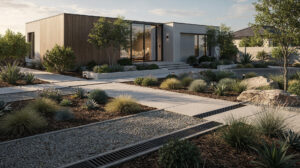
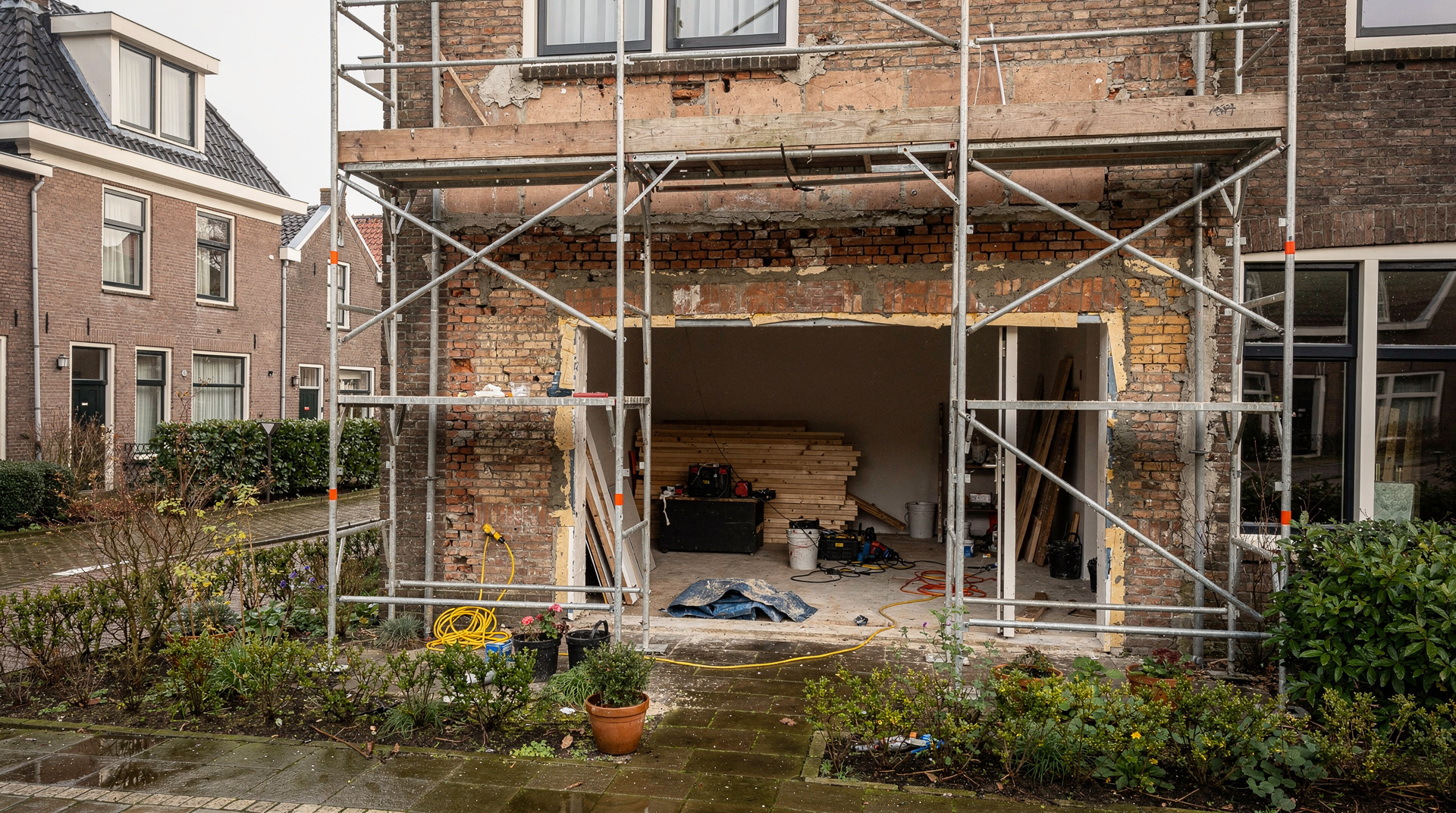
The entrance is one of the most problematic areas in Dutch housing. Most houses have a step or a raised level compared to the sidewalk, as well as high thresholds. Because of dense building layouts, it’s not always possible to create a long, gentle access path.
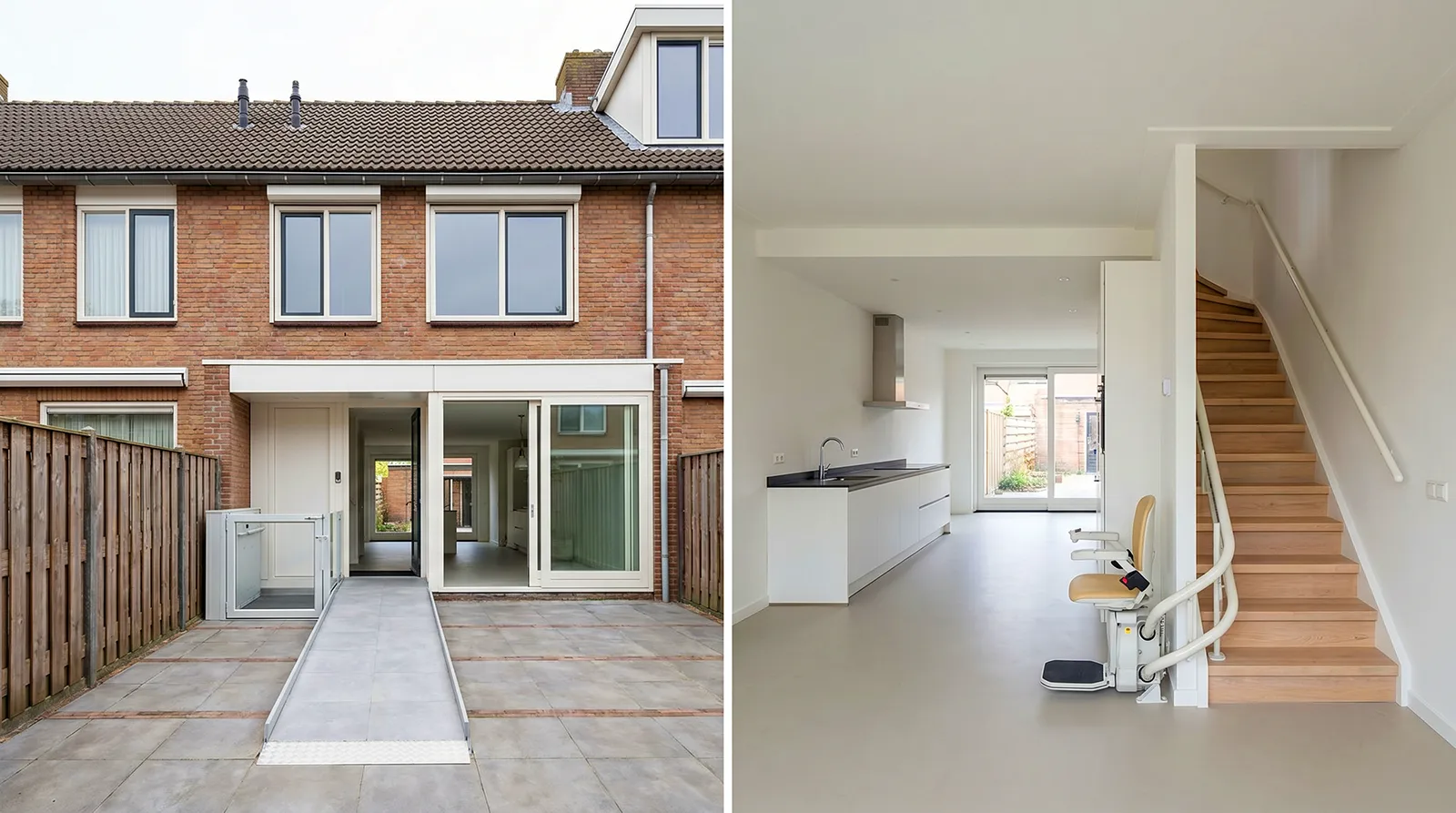
During homes renovation, work on the entrance often has the biggest impact on accessibility. Ramps for wheelchairs at home are the most common solution to use the entrance safely every day, not only in special cases.
Installing Ramps and Step-Free Entryways
In the Netherlands, accessibility ramps for homes are almost always made to fit each house. Every entrance is different. Sidewalk levels vary, space is tight, and many homes have steps, high thresholds, or drainage right at the door. In dense city areas, there is often no space for a long ramp. One standard design usually doesn’t work.
Basic technical rules:
- Keep the slope no steeper than 1:12
- Make the ramp at least 90 cm wide
- Use a non-slip surface – very important because of rain
- Add side edges for safety
In narrow streets, you’d better install short modular ramps or level the floor directly at the entrance. When you remove thresholds and level the entrance floor, don’t forget drainage. It lets rainwater flow away and keeps the doorway flat and safe.
Widening Doorways for Wheelchair Access
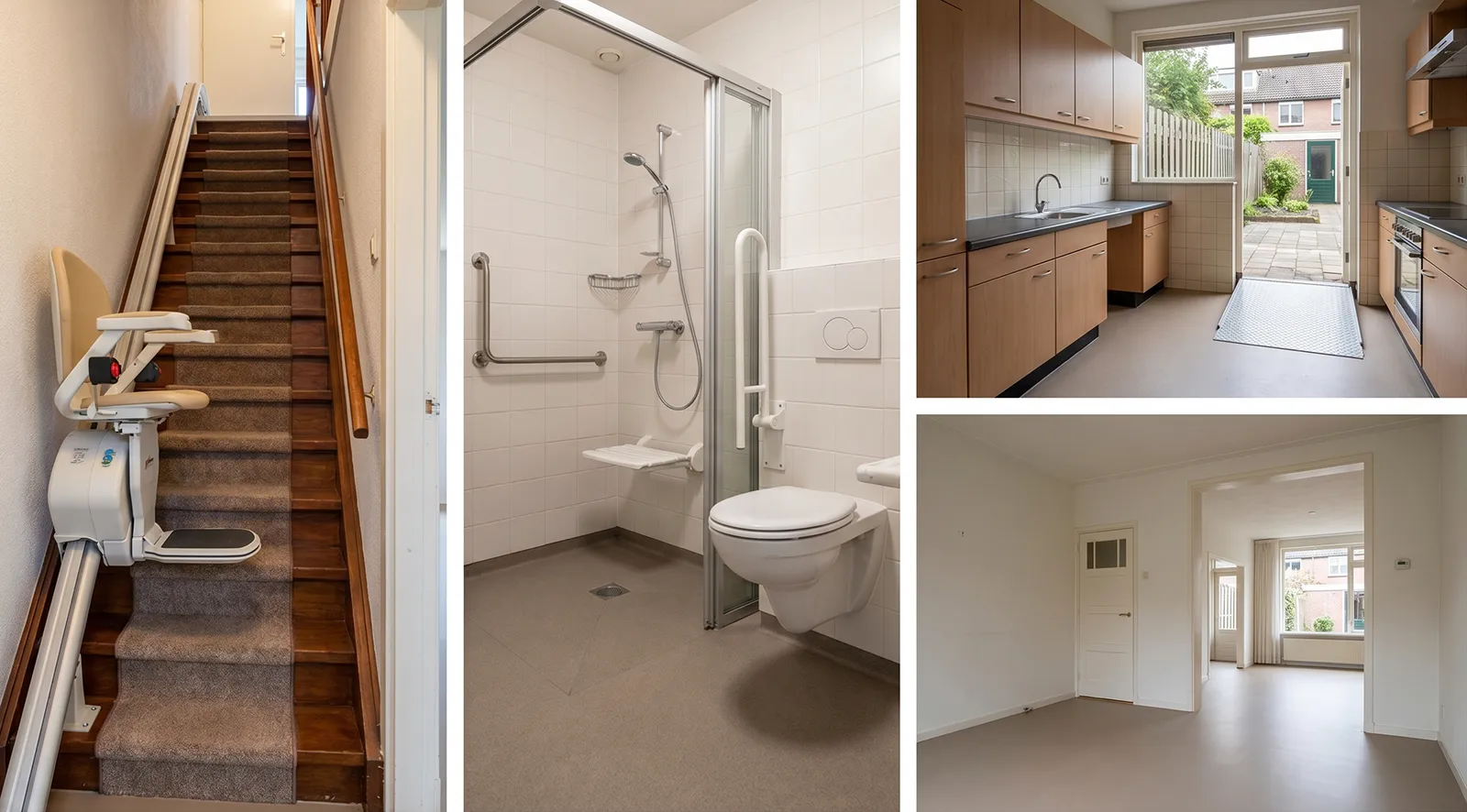
The standard door width in older houses is often 70–75 cm, which is not enough for a wheelchair. Comfortable access usually starts at 85–90 cm, but fully widening door openings is not always possible because of load-bearing walls.
In these cases, use standard home accessibility solutions that work well in Dutch houses:
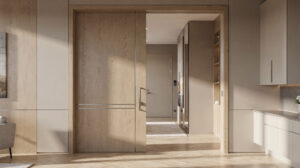
- Sliding or pocket doors
- Special hinges that increase the usable opening width
- Changing the direction the door opens
These solutions improve accessibility without major changes to the building structure.
Adding Handrails and Non-Slip Surfaces
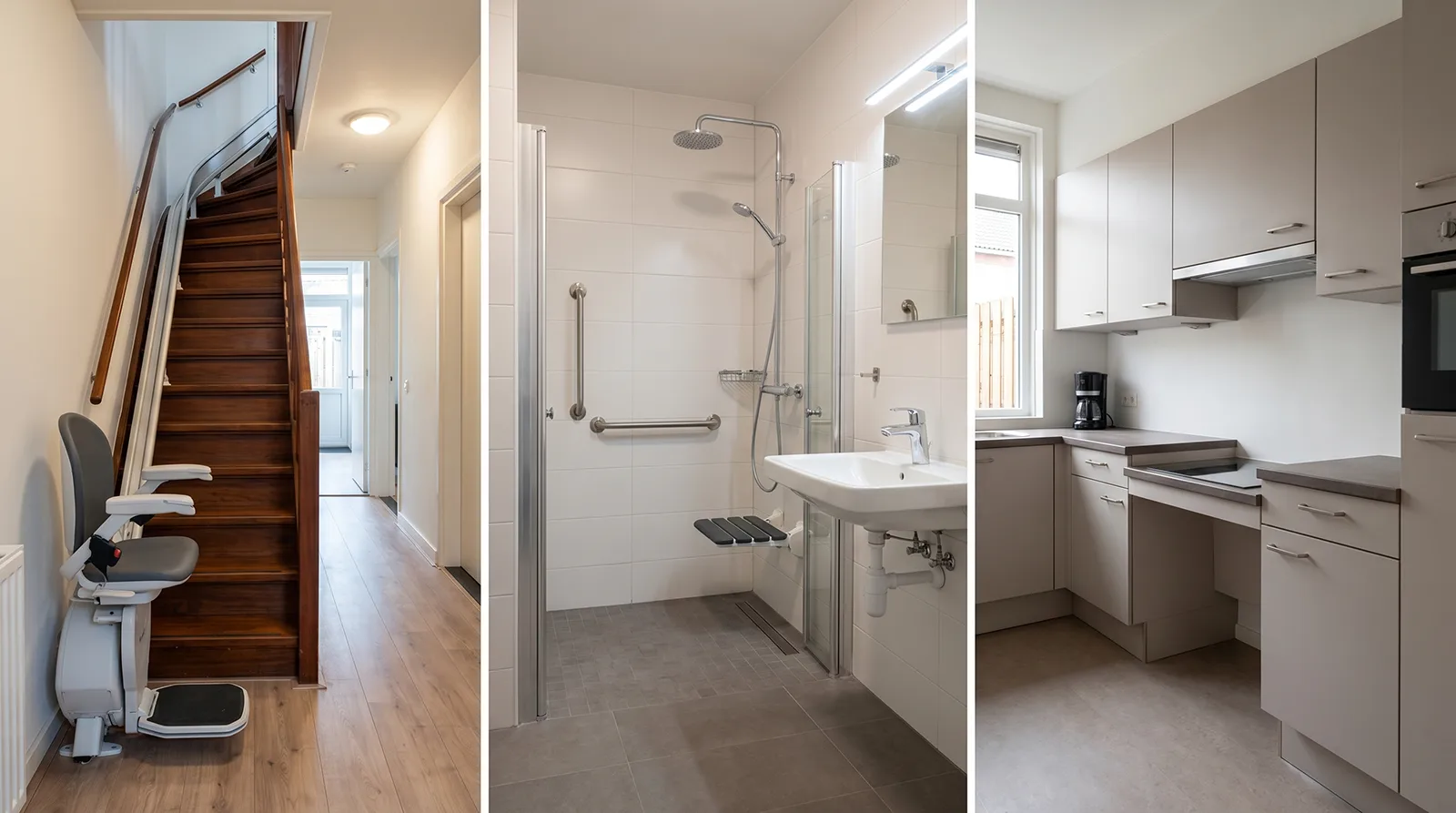
Handrails and non-slip surfaces are some of the most effective accessibility home modifications. They are especially important on the steep staircases typical for rijtjeshuizen.
Practical tips:
- Install handrails on both sides of the stairs
- Use contrasting colors for better visibility
- Add non-slip strips on stair steps
- Use rough, non-slip surfaces at entrances and terraces.
These solutions cut the risk of falls without complex changes to your entrance area.
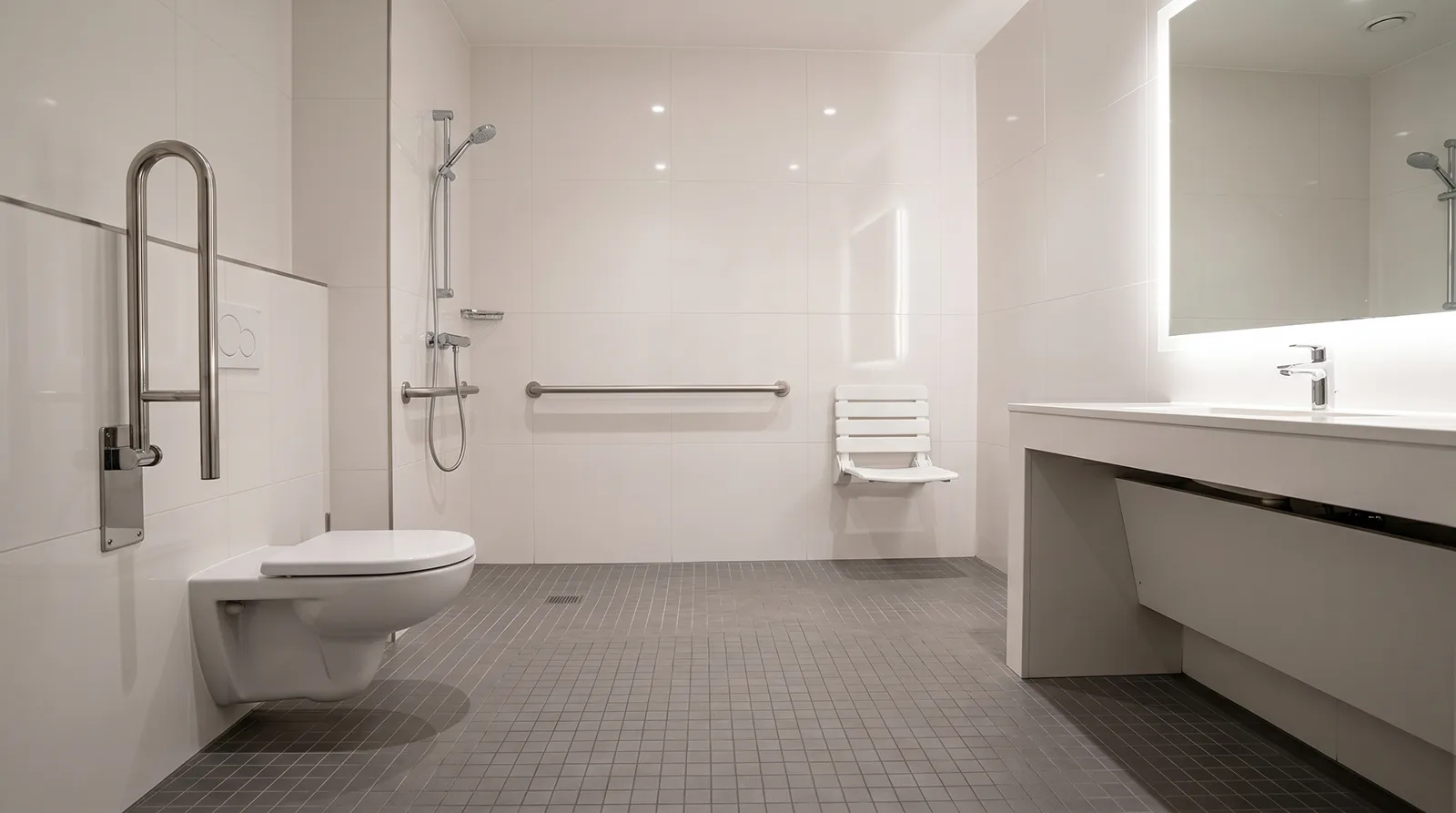
Bathroom Accessibility Modifications
Bathrooms in the Netherlands are often very small, usually around 3–5 m². Because of this limited space, standard layouts often don’t work. That is why accessible bathroom designs in Dutch homes focus on practical, space-efficient changes.
The most effective modifications are:
- Replacing the bathtub with a walk-in shower. A walk-in shower works better in small bathrooms and allows easy access.
- Step-free shower with a linear drain. A flat floor removes a common tripping point. A linear drain moves water away while the floor stays level.
- Wall-hung toilets with adjustable height. A higher toilet helps with sitting down and standing up. The height can be set for the person using it.
- Fold-down seats and grab bars. Shower seats support sitting during showering. Grab bars give additional support near the toilet and in the shower area.
- Using tiles that do not slip. They help stop people from falling on wet bathroom floors.
These changes let people with limited mobility use the bathroom safely.
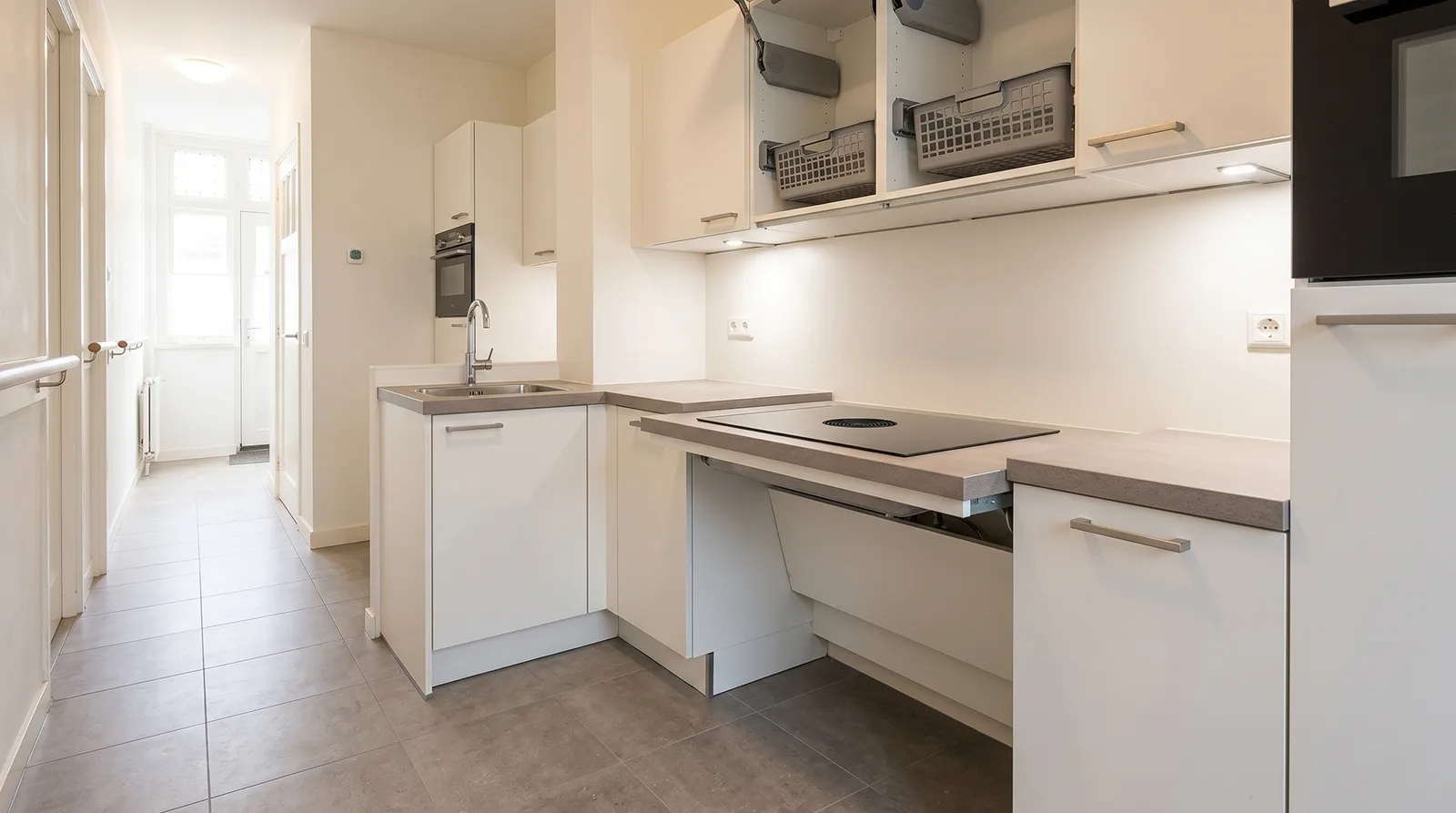
Accessible Kitchen Modifications
Local kitchens are usually small and narrow. Standard counters, high cabinets, and tight layouts stop people in wheelchairs from reaching everything. There is often no space to add more room, so changes focus on moving things and changing heights.
Practical tips for accessible kitchen design:
- Lower counters or use different heights (75–85 cm). People can reach them while sitting.
- Remove cupboards under the sink. Wheelchairs can roll under easily.
- Change upper cabinets to pull-out drawers or sliding shelves. Items are easier to grab.
- Use an induction stove with front controls. Buttons and knobs are at hand while sitting.
- Remove thresholds between the kitchen and other rooms. Walking around is safe and easy.
These changes help people with limited mobility use the kitchen safely. Older family members can also reach things comfortably.
Safety Improvements for Accessible Homes
If you take home modifications for wheelchair as a whole, not just by areas, there are things you need to change to move around the house more easily:
- Remove internal thresholds
- Level the floors
- Add automatic lighting in hallways
- Light up the stairs, if there are any
In the Netherlands, this is especially important because the days are short in winter and many houses have multiple levels.
Universal Design and Long-Term Accessibility
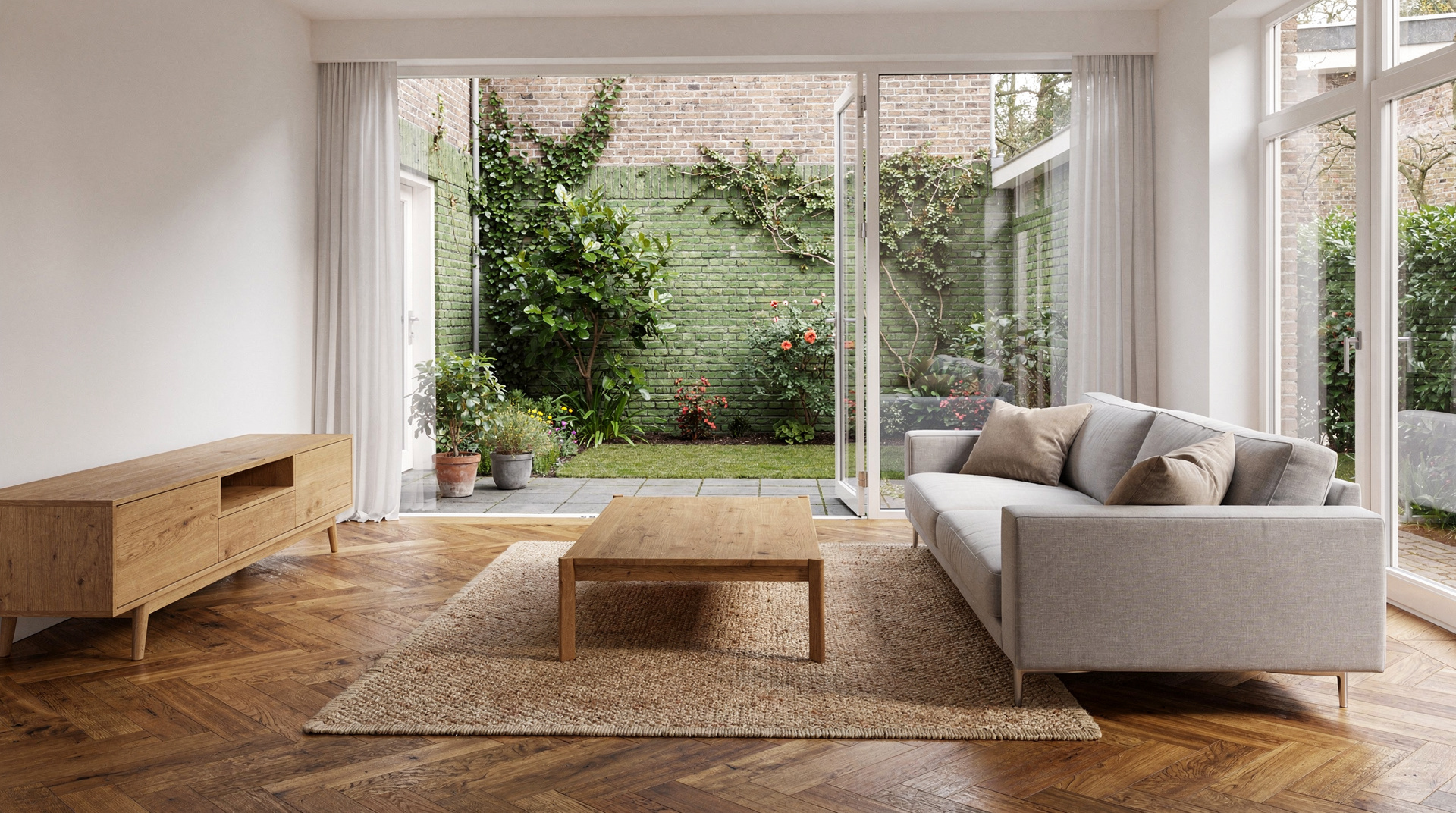
Universal design helps people stay in their homes without big changes later. For example, a wheelchair accessible bath is a universal solution. It works well for someone in a wheelchair and also for other residents. Houses with basic accessibility features are easier to change later and usually have a higher value.
At CBS Renovation, we have done over 100 big projects and many smaller ones, so we know what works in Dutch homes. We check the layout of your house, follow local rules, and suggest solutions that work.
Contact us for a consultation or a first estimate if you plan to renovate or adapt your home.