Green Roofs and Living Walls – Dutch Eco-Building Trends
Green roofs and living walls are two of the main eco-building trends in the Netherlands. This guide covers what they do, how widely they are used, and which Dutch cities help pay for them.
Green Roofs in the Netherlands
Benefits and Adoption
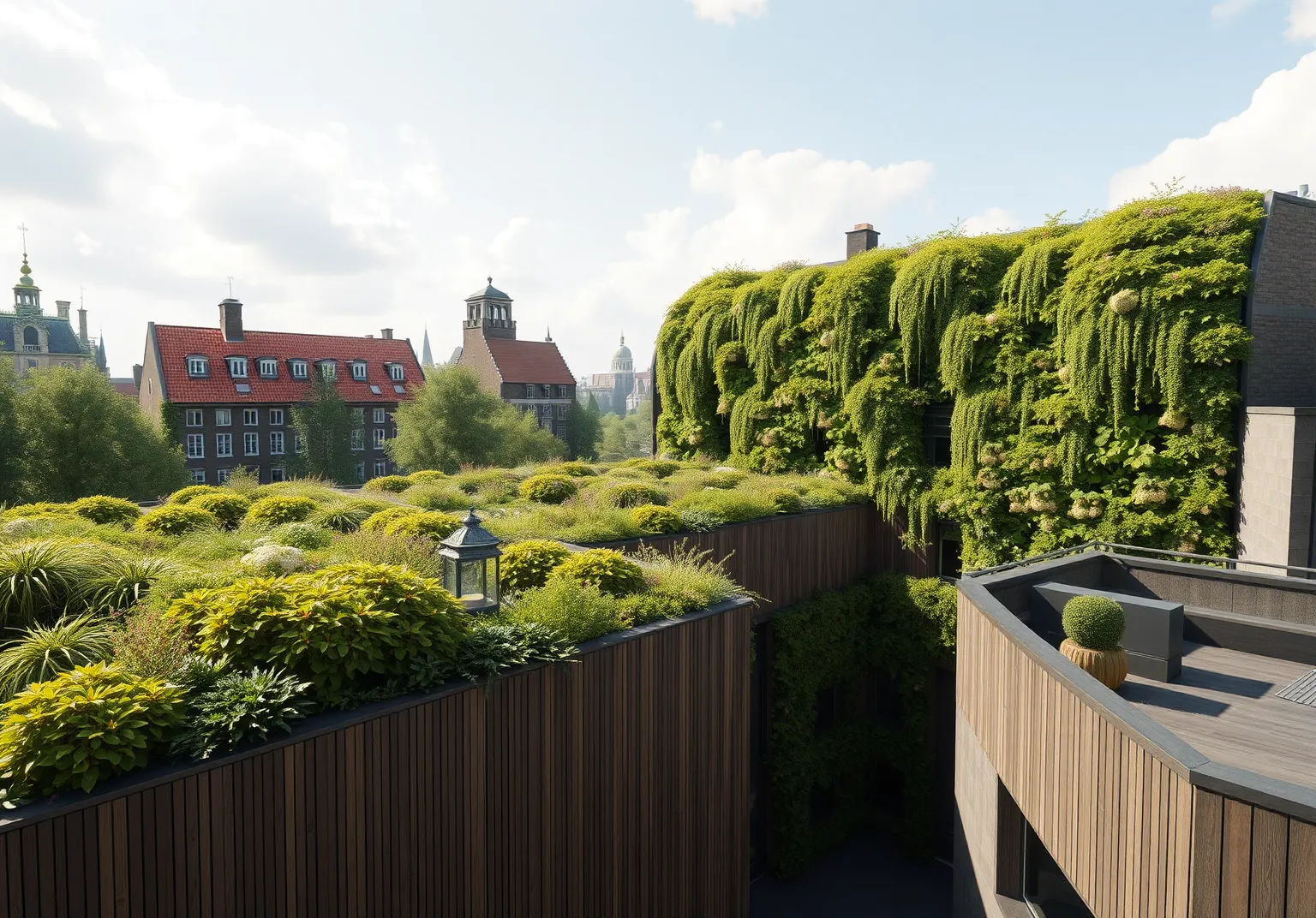
Green roofs address multiple urban challenges while adding a layer of greenery to buildings. They are designed to retain water, absorb pollutants, and provide natural cooling.
- Water Management: Green roofs help manage stormwater runoff, an issue even in a country known for its advanced water systems. By absorbing rainwater, they reduce pressure on drainage systems and help prevent flooding.
- Improved Air Quality: The vegetation on green roofs helps filter pollutants and improve overall air quality, benefiting densely populated urban areas.
- Biodiversity Boost: Green roofs provide habitats for birds, insects, and other wildlife, increasing biodiversity in urban settings.
- Mitigating the Urban Heat Island Effect: By absorbing sunlight and reducing surface temperatures, green roofs help lower the urban heat island effect, making cities cooler and more comfortable.
These benefits have led to widespread adoption of green roofs in Dutch cities, with many municipalities actively supporting their installation through subsidies and other incentives.
Government Support
The Dutch government has been proactive in promoting green roofs as part of its broader climate resilience strategy. Cities like Rotterdam, Amsterdam, and Utrecht offer financial incentives to encourage building owners to install green roofs.
- Rotterdam: Rotterdam has ambitious goals for expanding green roof coverage. The city views green roofs as vital for climate adaptation, offering subsidies to make installation more affordable for homeowners and businesses.
- Amsterdam: Amsterdam’s green roof initiatives are part of its effort to become climate-neutral by 2050, with funding available to support green infrastructure projects.
- Utrecht: Utrecht also promotes green roofs as part of its sustainability strategy, providing financial support for projects that contribute to urban greening and water management.
This strong government support has accelerated the growth of green roofs in the Netherlands, making them a common sight in urban areas.
Materials and Innovation
Dutch work on green roof materials is focused on biobased and circular options. Companies like Earthkweek and Babylon Daken are leading the shift towards 100% biobased roofs, which aim to replace traditional materials with sustainable alternatives.
- Biobased Materials: These include materials made from organic sources like hemp, jute, and other renewable resources, reducing the carbon footprint of green roofs.
- Circular Construction: Circular construction principles are applied to ensure that materials used for green roofs can be recycled and reused, aligning with the Netherlands’ commitment to a circular economy.
Living Walls in Dutch Architecture
Energy Efficiency and Climate Adaptation
Living walls, or vertical gardens, are another trend in Dutch eco-building. These green installations consist of vertically growing plants that are integrated into the exterior or interior walls of buildings.
- Natural Insulation: Living walls act as natural insulators, reducing heat absorption during summer and heat loss during winter. This reduces the need for artificial cooling and heating, making buildings more energy-efficient.
- Cooling Benefits: Living walls can cut cooling energy consumption by up to 50%, which matters in urban areas facing rising temperatures due to climate change.
- Climate Adaptation: Like green roofs, living walls help absorb rainwater and reduce the urban heat island effect, contributing to overall climate resilience in cities.
Adoption of living walls in the Netherlands has been slower than that of green roofs, though more cities are now writing them into their sustainability strategies.
Implementation Challenges
Two things limit how widely living walls are used in the Netherlands:
- Installation and Maintenance Costs: The initial cost of installation, along with ongoing maintenance requirements, can be higher for living walls compared to green roofs, making them less accessible to some property owners.
- Building Suitability: The effectiveness of living walls can vary depending on factors like building height, wall orientation, and local climate conditions, which can complicate their implementation.
However, cities like Rotterdam are starting to include living walls in their urban greening strategies.
The Future of Urban Greening in the Netherlands
Green roofs and living walls are expected to play a bigger role in Dutch urban development. They improve air quality, increase biodiversity, and provide natural insulation.
Government support, new materials, and growing public awareness point the same way: green roofs and living walls are likely to become standard parts of new buildings and renovation projects.
Subsidies, and Why Living Walls Cost More
Green roofs and living walls handle water management, air quality, and energy efficiency, and that is why Dutch cities put subsidies behind them. Living walls remain the more expensive of the two to install and maintain.