Microcement Bathrooms: The Seamless Design Trend for 2026
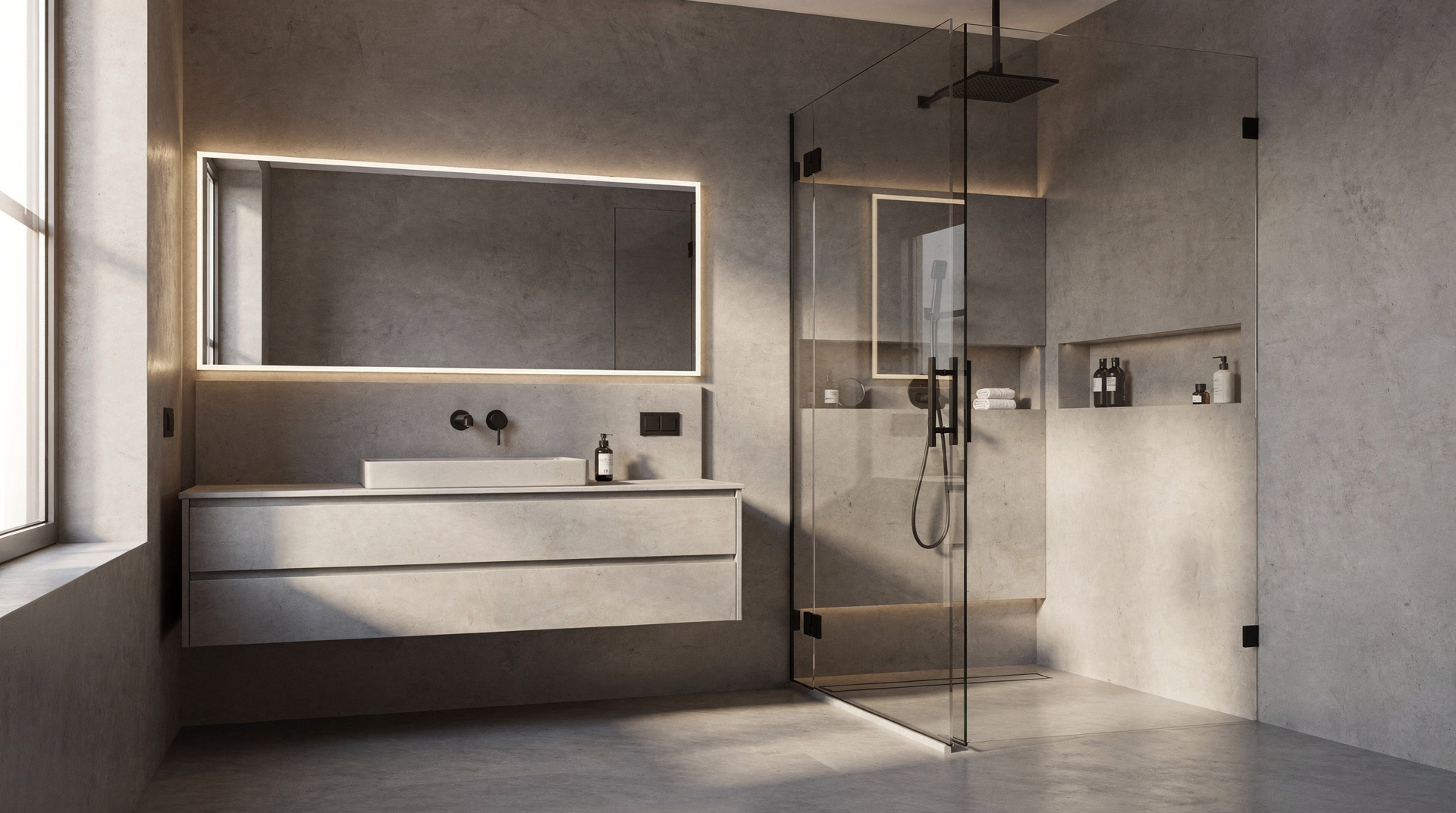
Have you ever looked at the grout lines in your washroom and wondered if there is a better way? More Dutch homeowners are dropping ceramic tiles for a single continuous surface with no joints to clean.
Beton Cire, Bouwvergunning and the Bouwbesluit
Before starting your project, you must understand the local terminology and regulations.
- Beton cire: The Dutch term for microcement, a polymer-modified cement plaster used for walls and floors.
- Bouwvergunning: A building permit. While interior updates rarely need one, structural changes do.
- Bouwbesluit: The national building code dictating safety, health, and sustainability standards.
The Science Behind the Surface
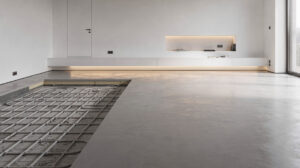
Why choose a microcement bathroom over standard tiles? Traditional tiles require grout, which is porous and prone to mould. Microcement creates a continuous, joint-free membrane. When applied by experts, this layer is sealed with a polyurethane topcoat, making it entirely waterproof. It is a practical tile alternative for modern homes.
This material aligns perfectly with the broader house renovation trend in the Netherlands, where minimalism and hygiene take priority. When planning a major project like a house extension Amsterdam, integrating these modern materials increases property value. Unlike thick concrete, microcement is only a few millimetres thick, meaning it adds virtually no weight to your floor structure.
Sustainability and Performance
Modern construction demands eco-friendly choices. Microcement qualifies as one of the most sustainable building materials available today. It requires less raw material to produce than ceramic tiles and reduces transport emissions due to its lightweight nature. Its high thermal conductivity also improves underfloor heating efficiency, lowering energy consumption during cold Dutch winters. This makes it a prime choice for a luxury bathroom renovation.
Applicators, Subfloor Checks and the Right Sealer
Achieving a perfect finish requires professional expertise. Follow these rules for a successful project:
- Hire certified applicators. Applying beton cire demands specialised knowledge of curing times and sealing techniques.
- Verify the subfloor. Ensure your professional checks the structural integrity and moisture levels before application.
- Choose the right sealer. Instruct your contractor to use a high-grade, UV-resistant polyurethane sealant to prevent yellowing.
- Plan your plumbing early. Coordinate with your plumber to embed fixtures before the final plaster layers go down.
Getting a Joint-Free Bathroom That Lasts
Upgrading to a joint-free bathroom transforms your daily routine. By understanding local building codes and relying on skilled tradespeople, you secure a beautiful, durable space.