
Why Dutch Homeowners Are Rethinking Their Walls: The Future of House Renovation in the Netherlands
Imagine your house as a living organism. Like skin that needs mending or a skeleton that requires reinforcement, Dutch homes across the country–from the narrow canal houses of Amsterdam to the post-war family dwellings in Utrecht–are undergoing a period of intense rehabilitation. But why are so many people choosing to stay put and expand upward rather than pack their boxes and move?
The answer lies at the crossroads of soaring property prices, strict environmental targets, and a cultural love for efficient design. If you are considering a house renovation in the Netherlands, you are not alone. Thousands of homeowners are asking how they can squeeze an extra bedroom from a historic roofline, replace a gas-guzzling heating system, or turn a damp 1970s relic into a climate-ready sanctuary. This article examines the mechanics, trends, and materials reshaping Dutch residential construction. Whether you dream of a sleek house extension in Amsterdam or a complete gut renovation in Eindhoven, here is what you need to know before a single brick is disturbed.
The DNA of Dutch Homes: Basic Concepts You Need to Know
Before permits are filed or foundations are poured, Dutch building rules demand a crash course in local vocabulary. Think of this as learning the rules of the road before driving across the Afsluitdijk.
Bouwvergunning and the Omgevingswet
At the heart of every structural project sits the bouwvergunning, or building permit. This is not merely bureaucratic paperwork; it is the government’s way of ensuring your extension will not collapse into your neighbor’s garden or cast an eternal shadow over their terrace. Recent shifts under the Omgevingswet, the Environment and Planning Act, have streamlined some procedures, but the core principle remains. You must prove your plans comply with zoning laws, safety codes, and aesthetic guidelines. Applying for a bouwvergunning is like asking the city to co-sign your architectural ambition. Without it, your dream project is legally invisible.
The Woningwet and Housing Quality
The Woningwet, or Housing Act, functions as the national guardian of livability. It sets minimum standards for everything from ceiling height to ventilation. If your renovation involves rental units or multi-family dwellings, these rules tighten further. The law treats housing as a fundamental right, which means cutting corners is not just risky; it is culturally unacceptable. Professionals internalize these thresholds so that every bedroom offers sufficient daylight and every staircase meets escape-width requirements.
Energielabel and the Quest for Efficiency
Every Dutch home carries an energielabel, an efficiency report card ranging from A++++ to G. Renovations offer a golden opportunity to vault up these rankings. Why does this matter? Beyond environmental guilt, a better label translates directly to lower monthly bills and higher resale value. It is the difference between driving a gas-guzzling vintage car and piloting a modern electric vehicle. During a renovation, replacing windows, insulating cavities, and upgrading heating systems all feed into this score. The government and banks increasingly reward higher ratings with preferential loans, so the label is as much a financial document as an environmental one.
Monumentenstatus: When History Holds the Reins
Approximately 61,000 buildings in the Netherlands wear the badge of national monument status. If your doorpost is one of them, your renovation journey changes entirely. Alterations must earn approval from heritage committees. Windows cannot be swapped on a whim; paint colors may require historical vetting. Owning a monument is like curating a museum piece you happen to live inside. It demands specialized architects who speak the language of conservation and contractors who understand lime mortar rather than modern cement.
The Professional Cast
Dutch construction vocabulary distinguishes between the architect, who draws your vision, and the aannemer, the contractor who pours the concrete and raises the beams. For complex structural work, an ingenieursbureau acts as the project’s spine specialist, calculating load paths so your roof extension does not end up as a headline in the evening news. Engaging these professionals is not an optional luxury; it is the bedrock of a safe, legal, and high-quality renovation.
Building Outward and Upward: The Art of the House Extension in Amsterdam
Amsterdam presents a peculiar puzzle. The city is shaped by concentric canals, heritage protections, and plots barely wider than a delivery van. Yet families need space. The solution? A house extension in Amsterdam has become an architectural art form of its own, where millimeters matter and creativity competes with regulation.
The Spatial Puzzle
With internal widths often hovering around four meters, classic canal houses were built for compact living. Today, inhabitants want open kitchens, utility rooms, and home offices. Architects treat these projects like three-dimensional chess games, moving staircases sideways, inserting steel into centuries-old brick, and carving light wells where no light previously existed.
Rear Extensions and the Garden Gambit
Extending into the garden is the most common maneuver. Homeowners sacrifice a few meters of turf to gain a sun-drenched kitchen or a ground-floor bedroom. But in Amsterdam, you cannot simply tack on a glass box and hope for the best. City planners scrutinize roof heights, wall materials, and sightlines. Your extension must whisper, not shout. Think of it as adding a new verse to a very old song; the melody must remain unchanged.
The Roof Extension Revolution
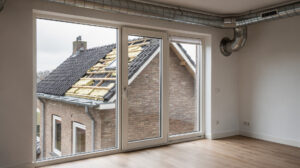
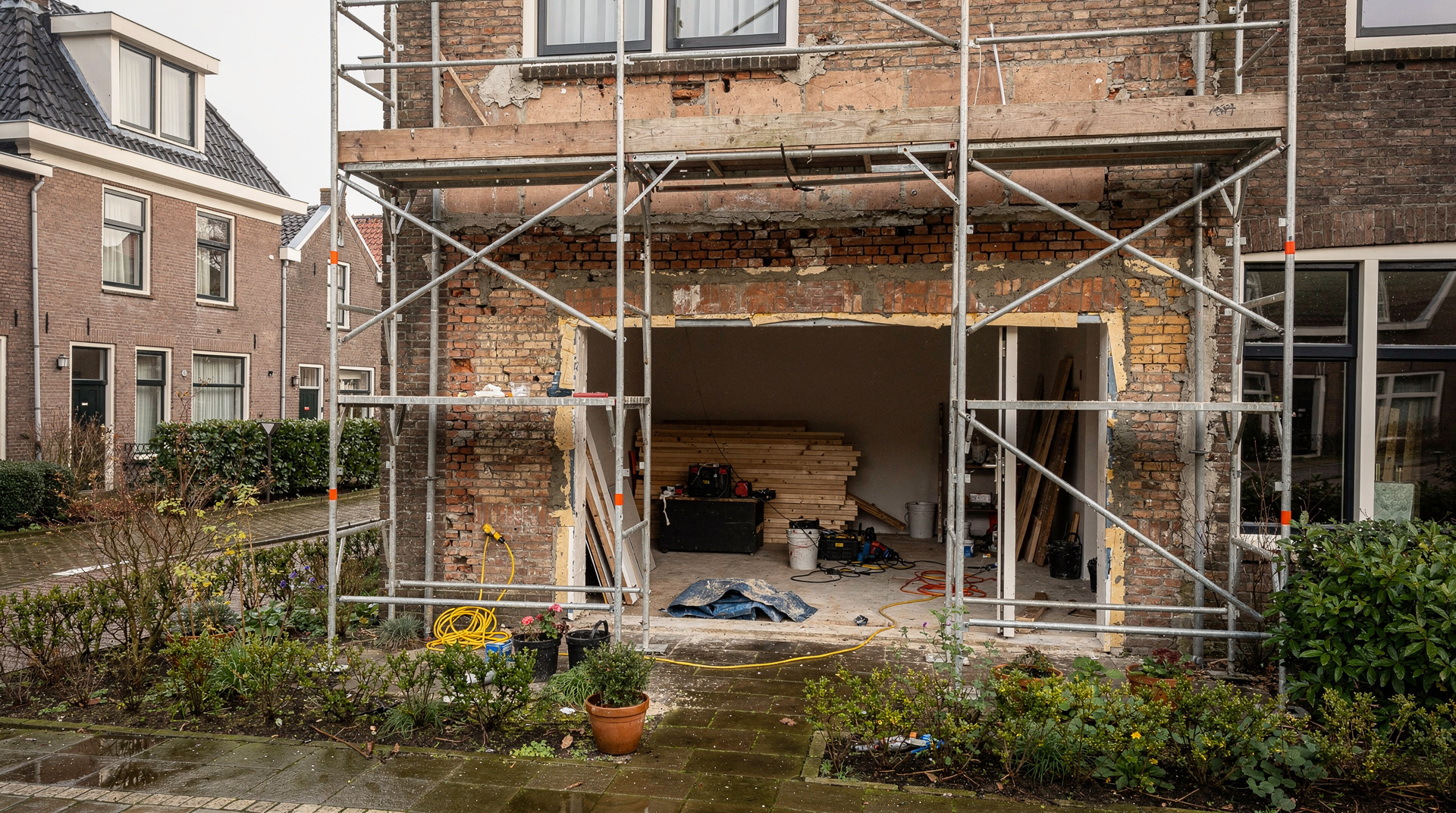
When horizontal land is scarce, the Dutch look to the sky. Dormers and full roof extensions pop up like mushrooms after autumn rain. These projects exploit unused attic voids, transforming dusty storage into master suites or workspaces. However, the structural math is unforgiving. A typical canal house was built in the 17th or 18th century for far lighter loads than today’s furniture. Adding modern floor loads requires steel inserts and surgical precision. This is not a weekend craft project. You need a structural engineer and an experienced builder who understands how to thread steel through antique brickwork without cracking the façade.
Digging Down: The Basement Option
For the ambitious, digging out a basement offers square meterage without altering the streetscape. It is expensive, messy, and requires dewatering systems to keep groundwater at bay. If your foundation sits below the water table, this path is like performing open-heart surgery on a patient who refuses to stop moving. Only highly specialized contractors with groundwater experience should attempt it.
The Permit Path for Extensions
Securing a bouwvergunning for an extension in Amsterdam often involves neighbors, heritage boards, and environmental officers. Some minor extensions fall under permitted development rights, but anything touching a listed façade or pushing boundary lines triggers formal review. Start this process early, ideally before you finalize contractor quotes. The city does not rush its judgments, and rightly so. A poorly placed extension can wound the visual rhythm of an entire canal belt.
Complete House Renovation in the Netherlands: More Than a Fresh Coat of Paint
What separates decoration from transformation? A complete house renovation in the Netherlands means stripping a dwelling to its studs, rethinking its respiratory and circulatory systems, and rebuilding it for a century it was never designed to face.
Stripping Back the Layers
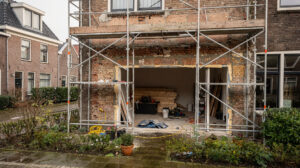
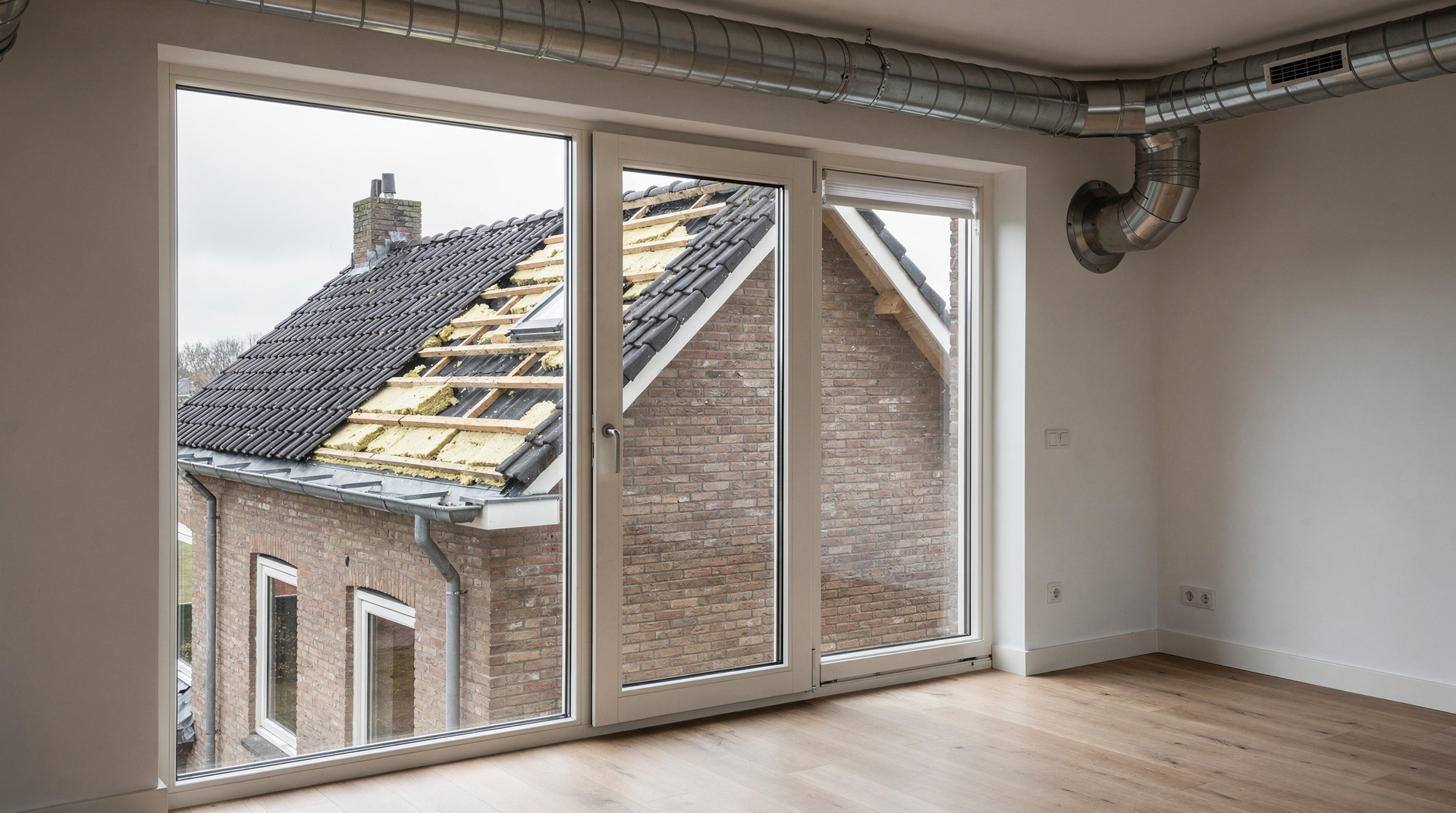
True renovation begins with demolition. Old plasterboard crumbles, floorboards lift, and the hidden sins of previous decades emerge. Knob-and-tube wiring, asbestos sheeting, and rotting joists often lie in wait. This phase is akin to an archaeological dig, except you are not searching for treasure; you are hunting for threats. Only licensed removal firms should handle asbestos. Only certified electricians should rewire circuits. The mantra is simple: if you do not hold the correct Dutch diplomas, step away from the breaker box.
The Great Gas Divorce
Dutch climate policy is aggressively decarbonizing housing. National strategy has placed a ticking clock on natural gas heating. A complete renovation is the perfect moment to divorce your home from the gas grid. Heat pumps, district heating connections, and thermal storage systems are replacing the traditional combi-boiler. Insulating concurrently is essential. Installing a heat pump in a draughty house is like wearing a winter coat with the zipper permanently stuck open. Professionals can perform blower-door tests to locate leaks before the plaster goes back up.
Phasing the Chaos
Unlike new construction, where workers start from bare earth, renovation demands choreographed chaos. Families often live on-site, cooking pasta while partition walls tremble. Dust containment, temporary kitchens, and municipal noise ordinances become daily realities. Professionals experienced in Dutch residential phasing know how to keep water running and roofs intact while gutting the floors below. Attempting this coordination without expert project management is like changing the tires on a moving car while blindfolded.
Financing the Overhaul
Complete renovations rarely clock in under six figures. Dutch banks offer renovation mortgages and energy-saving loans with favorable interest rates. National subsidy schemes reward homeowners who exceed efficiency targets. While the paperwork requires patience, the financial support signals a national priority: upgrading the housing stock is a collective project, not merely a private whim.
Construction Trends in the Netherlands: What 2025 Has in Store
The Dutch building sector does not stand still. Like wind turbines adjusting to breeze direction, industry practices shift rapidly. Here are the forces steering Dutch construction toward 2025.
Prefab Precision
Modular construction is shedding its reputation for flimsy temporary housing. Today, entire rear façades or bathroom pods arrive on trucks, precision-cut in factory conditions. This slashes on-site waste and reduces weather delays. Imagine ordering a custom wardrobe, except the wardrobe is your new kitchen and arrives with plumbing attached. The tolerances are tighter, and the onsite assembly time is halved.
Circular Building: Waste as Resource
The Netherlands aims to be fully circular by 2050. In renovation terms, this means material passports–digital documents tracking every beam and tile so future builders know exactly what sits in the walls. Demolition wood becomes flooring. Old bricks are washed and relaid. The construction site transforms from a landfill contributor into a sorting depot where nothing leaves without evaluation.
Biobased Materials: Growing Your Walls
Flax fibers, hempcrete, and mycelium insulation are leaving the laboratory and entering Amsterdam row houses. These materials sequester carbon and regulate humidity naturally. A wall insulated with hemp breathes like linen clothing, absorbing dampness without trapping mold. Cross-laminated timber is now framing multi-story additions. The Dutch are asking: why build with concrete that emits CO2 when you can build with crops that drank it in?
Climate Adaptation
Heavier rainfall and flash heat waves demand smarter envelopes. Green roofs act as sponges during summer deluges. Cool roofs reflect solar energy rather than storing it. Adjustable awnings and deep overhangs replace fixed, energy-hungry air conditioning. A modern Dutch renovation must account for weather patterns that did not exist when the foundation was poured.
Intelligent Energy Systems
Smart technology is no longer about voice-activated lamps. Integrated energy management systems balance solar production, battery storage, and heat pump cycles automatically. Your house becomes a miniature power station, trading energy data like a stockbroker chasing the best hourly rates. For renovators, this means pre-wiring for future capacity and installing meter cupboards with space to grow.
Renovation Materials: Choosing the Building Blocks of Tomorrow
Materials are the vocabulary of architecture. Choosing them wisely determines whether your house renovation in the Netherlands speaks clearly or mumbles into obsolescence.
Insulation: The Invisible Hero
Great insulation works like a thermos. Traditional mineral wool remains common, but sustainable building materials are gaining serious market share. Wood fiber boards lock carbon into the walls. Aerogel blankets offer remarkable thermal resistance in paper-thin profiles, ideal for heritage windows where bulk is impossible. Vacuüm isolatieglas–vacuum glass–achieves triple-glazing performance in a double-glazing thickness. For Amsterdam’s narrow window reveals, this technological leap is transformative.
Façade Finishes
Accoya wood, thermally modified to resist rot without toxic chemicals, offers durable cladding that weathers to silvery gray. Reclaimed brick salvaged from demolished factories carries more character than fresh kiln output. Even self-healing concrete, laced with limestone-producing bacteria, is entering pilot projects for foundation repair.
Interior Surfaces
Linoleum–made from linseed oil and cork–provides a renewable floor covering that outlasts vinyl. Bamboo, technically a grass, matures in five years versus oak’s eighty. For countertops, composite surfaces using recycled glass offer resilience without quarrying. Natural paints derived from clay or chalk eliminate volatile organic compounds, letting the house breathe as freely as its inhabitants.
Water and Air Systems
Rainwater harvesting tanks fit beneath garden decks, feeding toilets and irrigation. Heat recovery ventilation systems capture warmth from outgoing stale air and hand it to incoming fresh air. These systems turn your home into a lung that never wastes a breath.
Architect, Permit and Survey Before You Build
If you are standing at the base of the renovation mountain, here is how to ascend without losing your footing.
- Engage an architect before you fantasize further. Dutch zoning laws and structural realities will shape your dream whether you like it or not. Professional input saves costly delusions.
- Apply for your bouwvergunning six months early. Municipalities move slowly. Assume delays and celebrate when permission arrives ahead of schedule.
- Commission a full structural survey. What lies beneath the wallpaper can bankrupt your budget. Know your enemy: asbestos, foundation cracks, and woodworm.
- Insulate before you generate. Do not install solar panels or heat pumps until you have sealed the envelope. Efficiency first, production second.
- Budget for surprise. Set aside a minimum of fifteen to twenty percent for the unknown. Older houses always keep secrets in their floorboards.
- Select contractors with local track records. An aannemer experienced in Amsterdam canal houses understands the quirks of rope hooks, party walls, and groundwater. Generalists often miss nuance.
- Host weekly site meetings. Catch misalignments when they are centimeters, not meters. Communication prevents demolition of good work.
- Photograph everything. Before, during, and after. These records protect you during disputes and help future owners understand the building’s evolution.
- Plan your temporary life. If staying on-site, erect dust barriers and reserve cooking facilities. If moving out, budget for rents that last longer than expected.
- Upgrade your energielabel officially. Once improvements are complete, request a fresh assessment. The certificate is proof of quality and a passport to higher property value.
Looking Ahead: Building on Solid Ground
The Dutch housing stock is aging, the climate is shifting, and the demands of modern life are pressing against thin walls. Renovation is no longer a cosmetic hobby; it is a national imperative wrapped in personal ambition. From a modest house extension in Amsterdam to a zero-energy overhaul in Groningen, the projects reshaping the Netherlands share a common thread. They require patience, professional expertise, and a willingness to treat the home as an evolving organism rather than a frozen museum piece.
So, as you stand in your kitchen, coffee in hand, staring at the water stains on your ceiling or the draft slipping beneath your door, ask yourself not just what your house lacks, but what it could become. The tools, sustainable building materials, and regulations are already in place. The only remaining question is who you trust to wield them. Choose wisely, build boldly, and let your walls tell a new story.