Open-Plan Living for Family Togetherness: A Practical Guide to Dutch Home Renovation
Why does knocking down a single wall often feel more liberating than adding an entire new room? The answer lies in how we, as humans, experience space, light, and connection. In the Netherlands, where most of the housing stock is row houses and narrow townhouses, the architecture itself often dictates how families interact. A closed-off kitchen tucked behind a heavy door can turn cooking into a solitary task. A cramped living room boxed in by unnecessary partitions can make a Sunday afternoon feel claustrophobic. But what happens when those barriers disappear? Suddenly, the home breathes. Parents can cook while keeping an eye on children doing homework. Conversations flow from the dining table to the sofa without anyone being cut off. This is the heart of open-plan living, and it is reshaping how Dutch families think about home improvement Netherlands.
Open-plan layouts are no longer confined to luxury villas; homeowners in Amsterdam, Rotterdam, Utrecht, and beyond now ask for them as a matter of course. The 2025 renovation trends suggest that this movement is not slowing down; instead, it is becoming smarter, more sustainable, and heavily regulated. Anyone planning this needs to look past glossy magazine photos and understand Dutch building laws, structural engineering, and the materials that keep a family comfortable for decades – starting with the paperwork and ending with a floor that can survive muddy bicycle boots and spilled stroopwafel syrup.
Bouwvergunning, VvE and What You May Alter
Before you swing a sledgehammer, you must become fluent in the vocabulary of Dutch construction. The system here is precise, and misunderstanding a single term can cost you months and thousands of euros.
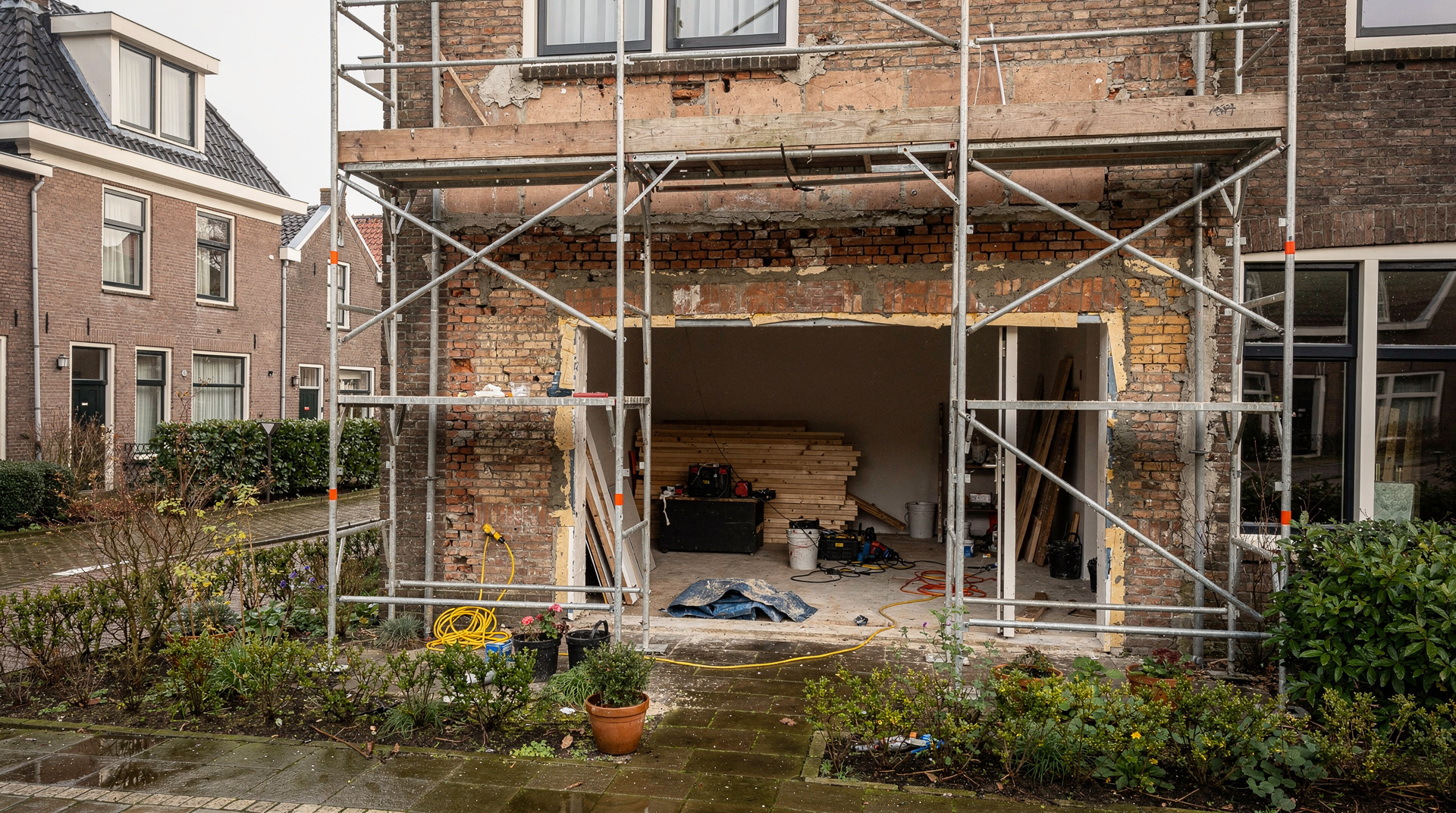
Start with the bouwvergunning. Think of this permit as the official green light from your municipality. It is the government’s way of ensuring that your dream kitchen extension does not accidentally block your neighbor’s sunlight or compromise the street’s architectural character. In many Dutch cities, especially within historic cores or protected zones, the bouwvergunning is non-negotiable. Submitting an application requires technical drawings, structural calculations, and often, proof that your plans meet energy efficiency standards. Without it, your renovation is illegal, and the gemeente can force you to reverse the work at your own expense.
Next, understand the difference between a woonhuis and an appartement. A woonhuis is a standalone or terraced house where you typically have more freedom to alter the structure. An appartement, however, is part of a larger block governed by a Vereniging van Eigenaars (VvE), or homeowners’ association. In an appartement, your walls might be someone else’s load-bearing structure, meaning your open-plan dream could literally bring the roof down on your downstairs neighbor. The VvE must approve any structural changes, and this process can be more complex than dealing with the municipality.
Finally, know the term monument. If your home is a rijksmonument or falls under local heritage protection, your renovation freedom shrinks dramatically. These buildings are considered national treasures. Removing a historic wall or replacing original windows might be forbidden or require special dispensation from heritage authorities. It is like trying to redesign a museum; the curators have a say in what stays and what goes.
Why Open-Plan Living Works for Dutch Families
What is it about a large, unobstructed room that makes family life feel easier? The psychology is surprisingly simple. Humans are social creatures, and we derive comfort from peripheral awareness. When a parent is cooking and can see a toddler playing, stress hormones drop. When teenagers can hear adult conversations from the kitchen island while working on a laptop at the dining table, they feel included rather than isolated. Open-plan spaces dismantle the invisible walls that separate family members into different emotional zones.
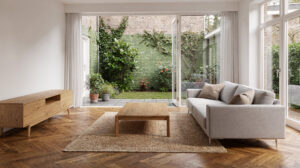
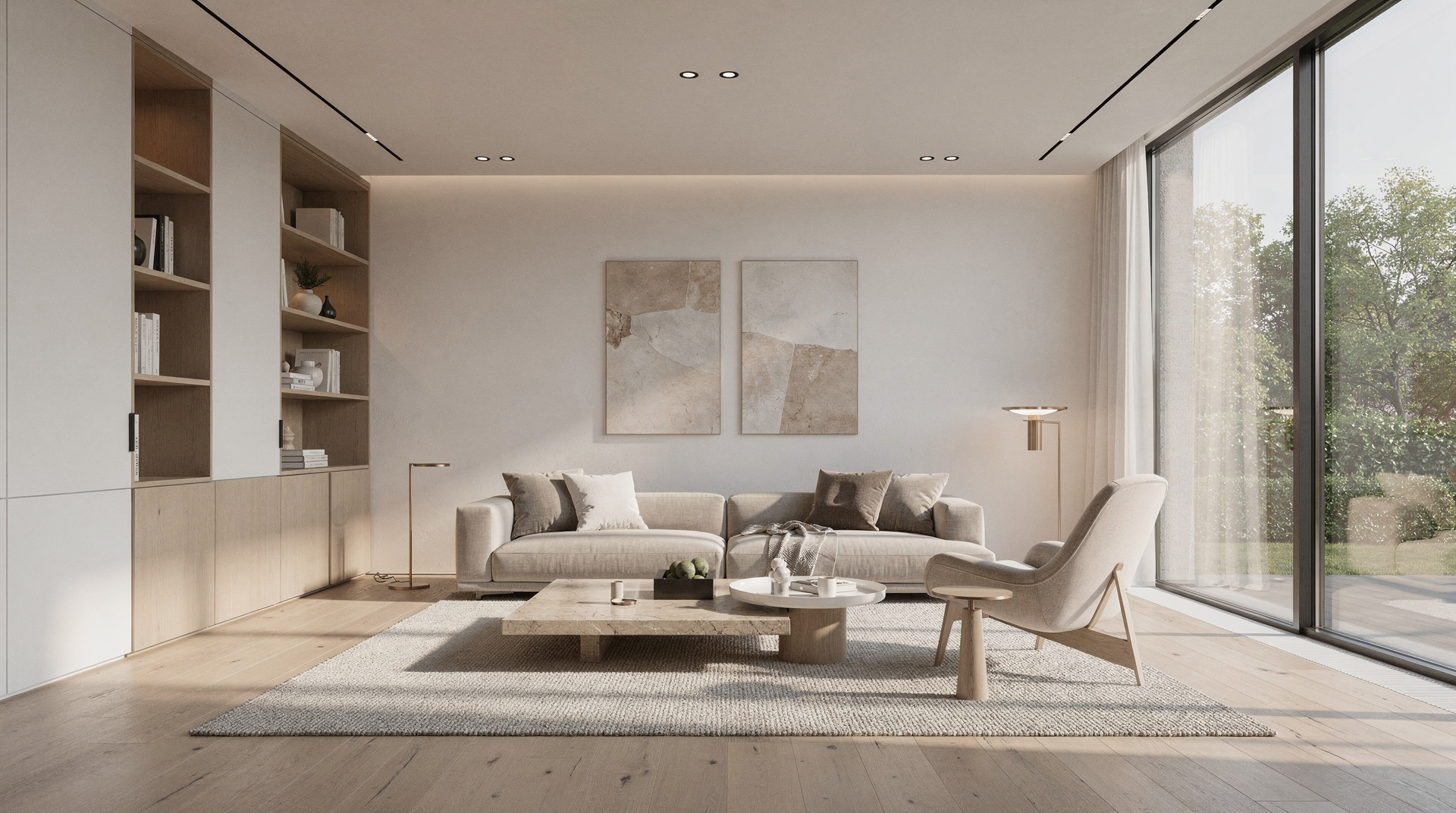
The layout suits modern Dutch living spaces because Dutch homes are often tall and narrow. A traditional Amsterdam grachtenhuis might be only six meters wide but four stories high. This verticality creates horizontal compression on each floor. By merging the kitchen, dining, and living areas into one continuous zone, you effectively hack the architecture. You trade multiple small, dim boxes for one bright, airy volume. Natural light penetrates deeper, which is a precious commodity during grey Dutch winters.
But the benefits extend beyond mood and light. An open-plan layout increases the functional versatility of your home. That dining table is not just for eating; it becomes a homework station during the week and a buffet table during birthdays. The kitchen island transforms into a bar when friends visit. The sofa faces the cooking area, turning meal prep into a shared performance rather than a chore. For families with young children, this visibility is a safety feature. For those with older relatives, it reduces the loneliness that comes with isolation in separate rooms. This is why Dutch home upgrade ideas increasingly center on demolition rather than addition.
The Rules: Getting Your Plans Approved
How do you turn this vision into reality without ending up in a legal battle with your municipality or your neighbors? The Dutch planning system is not designed to stop you; it is designed to ensure that one person’s renovation does not become another person’s nightmare.
If you own a woonhuis, your first stop is the Omgevingsloket, the online portal where most permit applications begin. Here, the distinction between a vergunningsplichtige activity and a vergunningsvrije one is critical. Minor internal changes, like repainting walls or replacing a kitchen, usually do not require a permit. However, removing a load-bearing wall, extending the building footprint, or altering the roofline almost always triggers the need for a bouwvergunning.
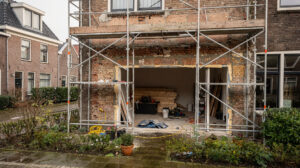
Think of your home as a human body. The load-bearing walls are the skeleton. Remove a thigh bone, and the body collapses. Before you remove any wall, you must hire a structural engineer to produce a formal calculation proving that the forces previously carried by that wall will be safely redistributed. This often involves installing a steel beam, sometimes called a stalen ligger, hidden within the ceiling void. The engineer’s report becomes a mandatory attachment to your permit application. Municipal inspectors will review it with the scrutiny of a forensic scientist, because public safety depends on their judgment.
For properties designated as monumenten, an additional layer of approval is required. You might need to consult the Monumentenwacht or the local heritage officer. They will assess whether your open-plan proposal destroys historically significant features, such as original enfilade doorways or ornate plasterwork. In many cases, a compromise is possible. You might be allowed to create openness while preserving and restoring the original door frames as decorative elements, maintaining the historical narrative of the space.
Neighborhood consultation is another step that surprises many homeowners. Dutch law emphasizes the rights of adjacent property owners. If your house extension in Amsterdam blocks a neighbor’s window or reduces their privacy, they have the right to object during the public consultation phase of your application. This is not a mere formality. Objections can delay or kill a project. Smart homeowners talk to their neighbors before submitting any paperwork, turning potential adversaries into allies.
Structural Engineering: The Science of Safe Open Spaces
What actually happens inside your walls when you create an open plan? The physics is both elegant and unforgiving.
Every building is a system of weights and balances. The roof presses down. The walls push back up. The floors distribute people, furniture, and snow loads to the walls below. When you remove a wall, you remove a column in this vertical chain. The load does not simply vanish; it finds a new path to the ground. If you fail to provide that path, the ceiling sags, cracks spider across plaster, and in the worst case, structural failure occurs.
This is why hiring a licensed structural engineer is not optional. A professional will analyze the flow of forces using specialized software and decades of training. They might specify a steel I-beam spanning six meters to hold up the floor above, or they might recommend a laminated wood beam for a more natural aesthetic. In contemporary 2025 renovation trends, hidden beam systems are gaining popularity. These allow for clean, uninterrupted ceiling lines by recessing the structural element within the floor construction.
Foundations are another hidden concern. Dutch soil, particularly in areas like the Randstad, is notoriously soft. A house renovation Netherlands project that adds significant weight–say, a heavy stone kitchen island on a floor that was not designed for concentrated loads–can stress the existing foundation piles. In some older homes, especially those on wooden poles in Amsterdam, the engineer might advise underpinning or soil reinforcement before any walls come down. Ignoring this is like piling bricks onto a cardboard box; eventually, the bottom gives way.
Acoustics also become a structural consideration. One downside of open plans is noise. Without walls to absorb sound, a crying baby, a blender, and a television create a cacophony. Structural solutions exist. Acoustic plasterboards, resilient floor underlayments, and carefully placed soft furnishings act as sound sponges. Your engineer and architect can model sound propagation and recommend materials that preserve openness while dialing down the decibels.
Materials for the Modern Dutch Home: Sustainable and Smart
What are the best building blocks for an open-plan renovation that will last a lifetime and protect the planet? The Netherlands sits at the forefront of European sustainability policy, and your choice of materials can make or break both your environmental credentials and your long-term maintenance budget.
Sustainable building materials are no longer niche products tucked away in specialty shops. Cross-laminated timber, or CLT, is plywood scaled up and engineered for structural strength. CLT panels can replace concrete and steel in many applications, sequestering carbon rather than emitting it. A CLT ceiling in an open-plan space introduces warmth and texture that concrete simply cannot match. It turns the structural element into a design feature.
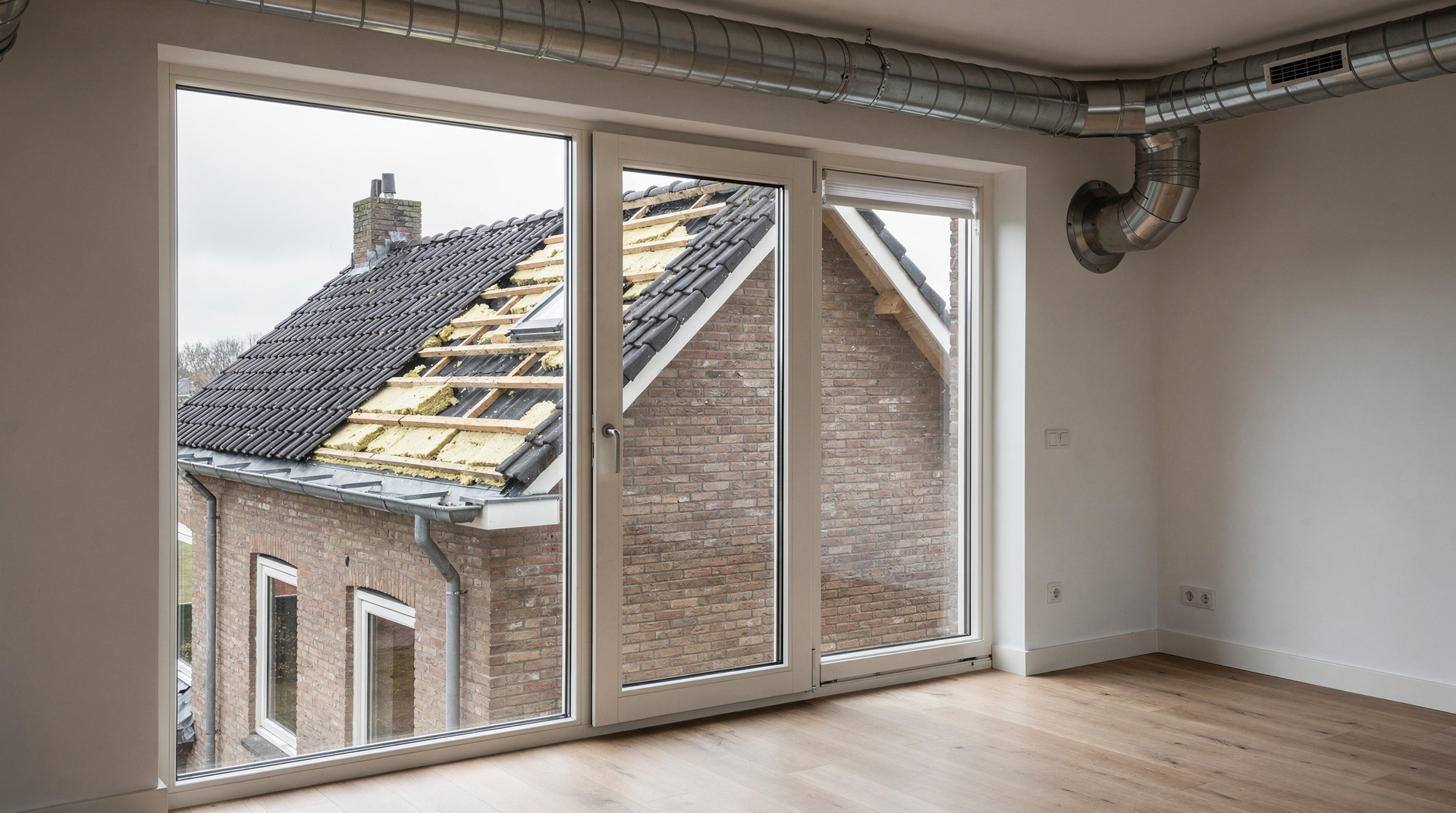
For insulation, which is critical in the Dutch climate, consider sheep wool or recycled denim insulation. These materials regulate humidity naturally, preventing the mold issues that plague poorly ventilated Dutch homes. A well-insulated open-plan room retains heat more efficiently than a series of small rooms, because there are fewer external walls relative to the internal volume. However, this efficiency depends on quality installation. Gaps in insulation are like holes in a winter coat; they render the whole effort useless.
Flooring in a high-traffic family zone demands durability. Large-format porcelain tiles mimic natural stone but resist stains and scratches. For those wanting wood, engineered oak performs better than solid planks in the fluctuating humidity of Dutch winters, because the layered construction prevents warping. Underfloor heating works with both, turning the entire floor into a radiator. In an open-plan layout, this is far more efficient than radiators, which create hot and cold pockets.
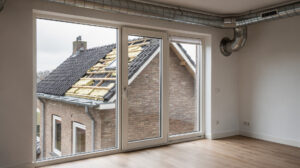
Windows and glazing come last. In an open plan, exterior walls are often pushed to their limits with large openings. Triple glazing is becoming the standard for best renovation tips Netherlands enthusiasts. Think of a triple-glazed window as a thermos flask. Two air gaps filled with inert gas create a formidable barrier against heat loss. This is essential when your single living space has vast glass surfaces facing a chilly North Sea wind.
Integrating the Old with the New
How do you respect the character of a 19th-century Dutch townhouse while injecting it with 21st-century openness? The most successful Dutch home upgrade ideas do not erase history; they reinterpret it.
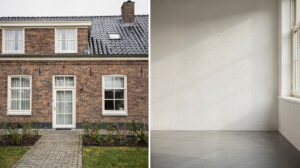
Original features like ceiling roses, exposed brick walls, or wide plank floors can become the anchors of a modern open plan. An exposed brick chimney breast, for example, can contrast beautifully with sleek, handle-less kitchen cabinetry. Original ceiling beams, once hidden by drywall, can be stripped and stained to add rhythm and warmth to a large ceiling plane. This approach is called adaptive reuse, and it is far more interesting than a sterile, all-white box.
In heritage properties, this balance is not just aesthetic; it is a legal and ethical obligation. Removing every original feature might satisfy a craving for minimalism, but it will likely violate monument regulations and diminish the resale value of the home. Instead, architects are now creating what might be called “visual dialogue.” The old details are preserved as focal points, while new elements–like a floating steel staircase or a glass partition–provide modern function without historical impersonation.
Lighting design also bridges eras. A vaulted ceiling in a former warehouse, now converted into a family home, benefits from track lighting that highlights the curvature of the original brickwork. Smart lighting systems allow you to zone the open plan virtually. A single button can transition the space from bright, task-oriented cooking light to a dimmed, warm glow for movie night. This technology achieves what walls used to do: it creates mood boundaries without physical ones.
Hiring Your Team and Talking to the Neighbors
If you are ready to start, here are the steps in order:
- Hire an architect before anyone else. A professional designer will translate your family habits into spatial reality. They will spot opportunities you miss and flag problems you cannot see. Their early involvement saves money by preventing costly mid-project changes.
- Engage a structural engineer immediately. Do not assume a wall is safe to remove. Commission a full structural survey of your property. Demand written calculations for any beam or column modifications.
- Visit the Omgevingsloket and your municipality’s planning department. Understand exactly what requires a bouwvergunning in your specific location. Do not rely on general internet advice; local rules vary.
- Talk to your neighbors before submitting applications. Explain your plans informally. Address their concerns about privacy, light, and construction noise. A supportive neighbor can speed up approvals; an angry one can stall them for months.
- Commission an energy audit. An open-plan home has different heating and cooling needs. An auditor will model your energy consumption and recommend insulation, glazing, and HVAC upgrades that keep the space comfortable affordably.
- Choose a contractor with proven experience in open-plan renovations. Ask for references and visit completed projects. Structural work is not the place for a general handyman; you need specialists.
- Establish a contingency budget of at least 15 percent. When walls come down, surprises appear. Old wiring, hidden rot, or unstable foundations can inflate costs. A financial cushion prevents panic.
- Plan your temporary living arrangements. A major open-plan renovation often makes the kitchen and living areas unusable. Budget for a short-term rental or an extended stay with family to preserve your sanity.
- Prioritize sustainable materials. Specify recycled content, low-VOC paints, and FSC-certified timber. Your choices impact indoor air quality and the broader environment.
- Design for acoustic comfort from day one. Do not treat sound as an afterthought. Integrate absorptive materials, soft furnishings, and strategic zoning to prevent your beautiful space from becoming an echo chamber.
What Lies Ahead: The Future of Dutch Family Living
The 2025 renovation trends indicate that open-plan living is evolving. The post-pandemic era taught us that a single, vast room serving as office, school, and living area has its limits. The next wave of Dutch design uses “broken plan” or “flexible plan” layouts: sliding glass doors, pivoting panels, or built-in shelving units that close the space off when you need it closed and open it up again when you do not.
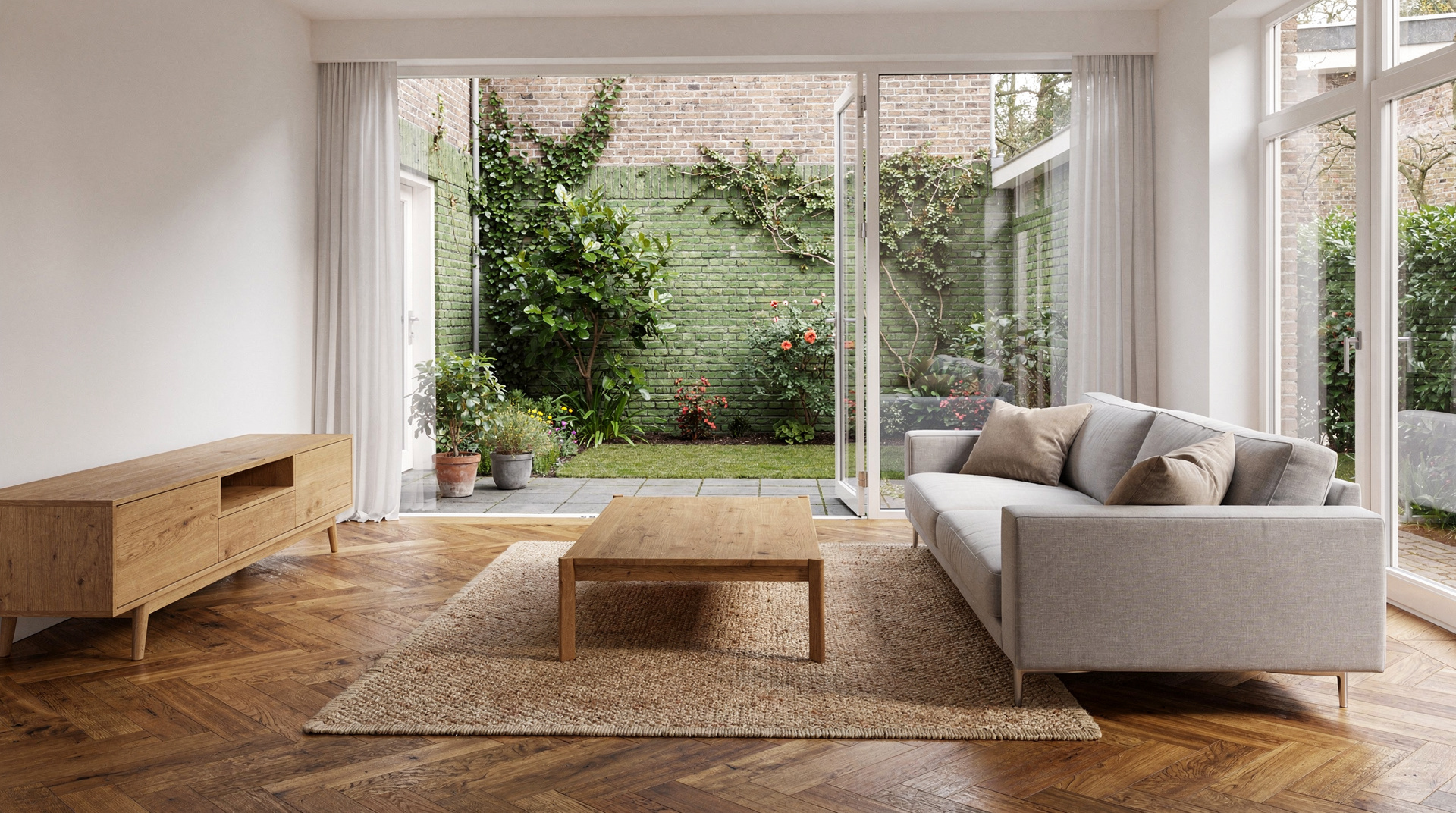
Biophilic design is another rising force. This is the practice of weaving nature into architecture. In Dutch renovations, this means internal courtyards, living walls of moss or ferns, and massive skylights that track the sun’s path. For families, this connection to nature helps with mental health and focus. An open-plan space with a central garden view feels fundamentally different from one facing a brick wall.
Smart home technology will also play a larger role. Automated shading, climate control, and lighting will allow a single room to serve multiple purposes. A system can pick up that the family has sat down to dinner and adjust the music, temperature, and light color to match. That is the direction home improvement Netherlands is heading.
Yet through all these trends, the core principle remains unchanged. The reason Dutch families knock down walls is not to follow fashion. It is to live better. It is to see each other more, to share tasks rather than divide them, and to turn the house from a collection of sleeping and eating cells into a home.
Building a Stage for Family Life
Creating an open-plan living space in the Netherlands is one of the most rewarding investments a family can make, but it demands respect for the process. The permitting system takes patience, the structural work has to be done properly, and the materials have to suit both the family and the environment. The bouwvergunning is your legal compass. The structural engineer is your safety net. The architect is your translator, turning the abstract desire for togetherness into walls that are strong, warm, and legally sound.
Do not attempt to cut corners by avoiding permits or hiring unqualified labor. The risks–financial, legal, and physical–are too great. Instead, assemble a team of professionals who understand Dutch regulations and share your vision. The builder, engineer, and architect all have to be working from the same drawings, and so do you.
As you plan your project, keep sight of the “why.” You are not just removing a wall. You are building a stage for your family’s daily life. Every meal prepared, every conversation shared, and every quiet evening spent in sight of the people you love is the true return on your investment.